Dubai One — a concept life operating system
15-module ecosystem
AI Companion — always quiet, always present
One resident record
150+ designed screens
Independent concept — 2026
Dubai One — a concept life operating system
15-module ecosystem
AI Companion — always quiet, always present
One resident record
150+ designed screens
Independent concept — 2026
CH.04 Research Approach
A concept product, grounded in structured design research — not live user interviews.
Because Dubai One is an independent concept rather than a commissioned product, the discovery phase focused on secondary research, competitive analysis, ecosystem mapping, resident journey analysis, and hypothesis-driven UX exploration — no primary user interviews were conducted for this project.
Secondary Research→
Competitive Analysis→
Resident Journey Mapping→
Pain Point Hypotheses→
Opportunity Mapping→
Product Strategy
Research Goals
Understand the likely emotional and administrative journey of relocating to Dubai — from visa approval through feeling genuinely settled — using publicly available information and competitive patterns.
Method
Secondary research and a competitive teardown of existing government and lifestyle apps, synthesized into journey maps and design hypotheses.
Research Themes & Design Hypotheses
Patterns observed through secondary research — treated as hypotheses to validate, not measured findings.
Theme 01
Relocation creates a high-friction first phase
New residents must coordinate identity, housing, mobility, and financial tasks across multiple, disconnected services.
Theme 02
Administrative tasks are rarely isolated
Completing one task often creates a dependency on another service — a lease unlocks a utility transfer, which unlocks a bank update.
Theme 03
Residents need context, not just services
People need to understand what to do next, not simply gain access to another government or lifestyle service.
Illustrative Resident Archetypes
Hypothetical profiles synthesized from secondary research and competitive patterns, used to design against — not real interview subjects.
The Newcomer
Early relocation phase
Needs a guided path with nothing missed.
The Settled Resident
Established, low-touch phase
Wants everything running quietly in the background.
The Relocation Manager
Manages relocation on behalf of others
Needs visibility across many people at once.
CH.06 Product Architecture
One system, mapped from the root down to every module.
The full information architecture — how Authentication, the Dashboard, and Profile branch into the Journey Engine, and how every life-domain module ultimately reports back through the AI Concierge.
Feature Ecosystem
Every module is connected. Nothing is an island.
Navigation
Five destinations. Nothing hidden in menus.
Information Architecture — Grouped
Five groups. The AI Companion orchestrates across all of them, rather than sitting inside one.
Core
AI Companion
Resident Profile
Life
Housing
Mobility
Finance
Healthcare
Identity
Visa
Emirates ID
Documents
Community
Events
Groups
Networking
Neighborhood
Explore
Restaurants
Attractions
Lifestyle
Weekend Planning
AI Companion — The Orchestration Layer
Not a chatbot. A layer that connects services, not a destination of its own.
In this concept, the AI Companion is positioned to:
Understand resident context
Resident Context→
Current Goals→
Service Data→
AI Reasoning→
Next Best Action
CH.09 Product Walkthrough
Every module, screen by screen.
150+ designed screens across the broader 15-module ecosystem, with nine primary experiences showcased in detail below — each grouped by flow, so the reasoning is visible alongside the interface.
Module 01
Dashboard
Replace a static menu of icons with a prioritized view of what actually needs attention today.
Overview→Flow Diagram→Screens
Design decision — surface a ranked, living feed instead of a grid of equally-weighted destinations.
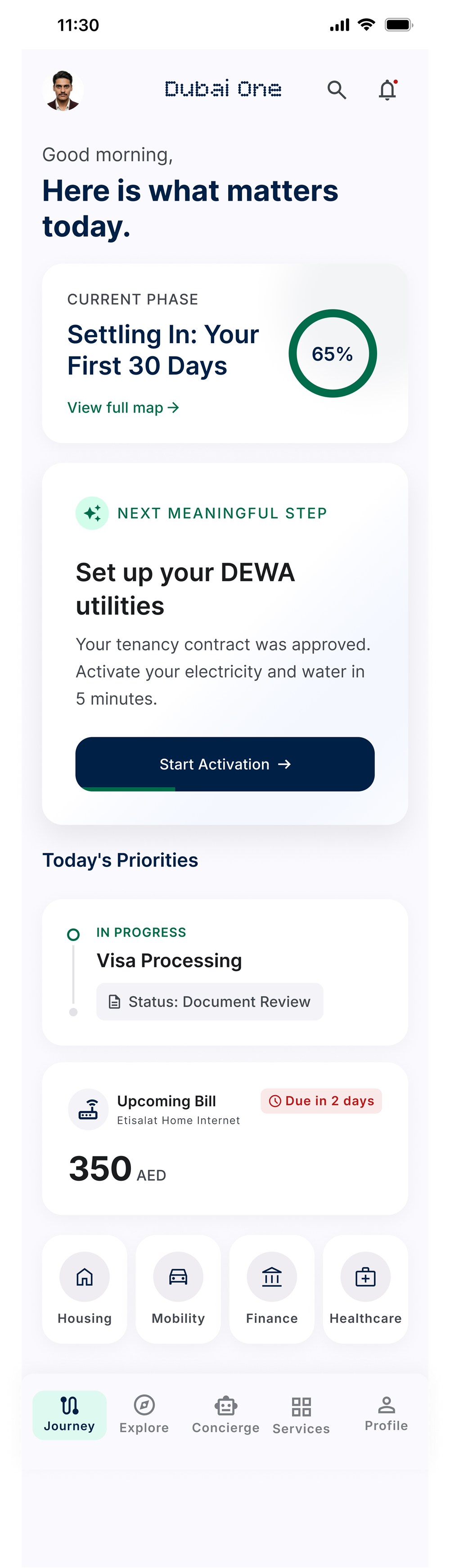
01 — Journey Dashboard
Personalized priorities and next steps
02 — Journey Home
Progress across resident journeys
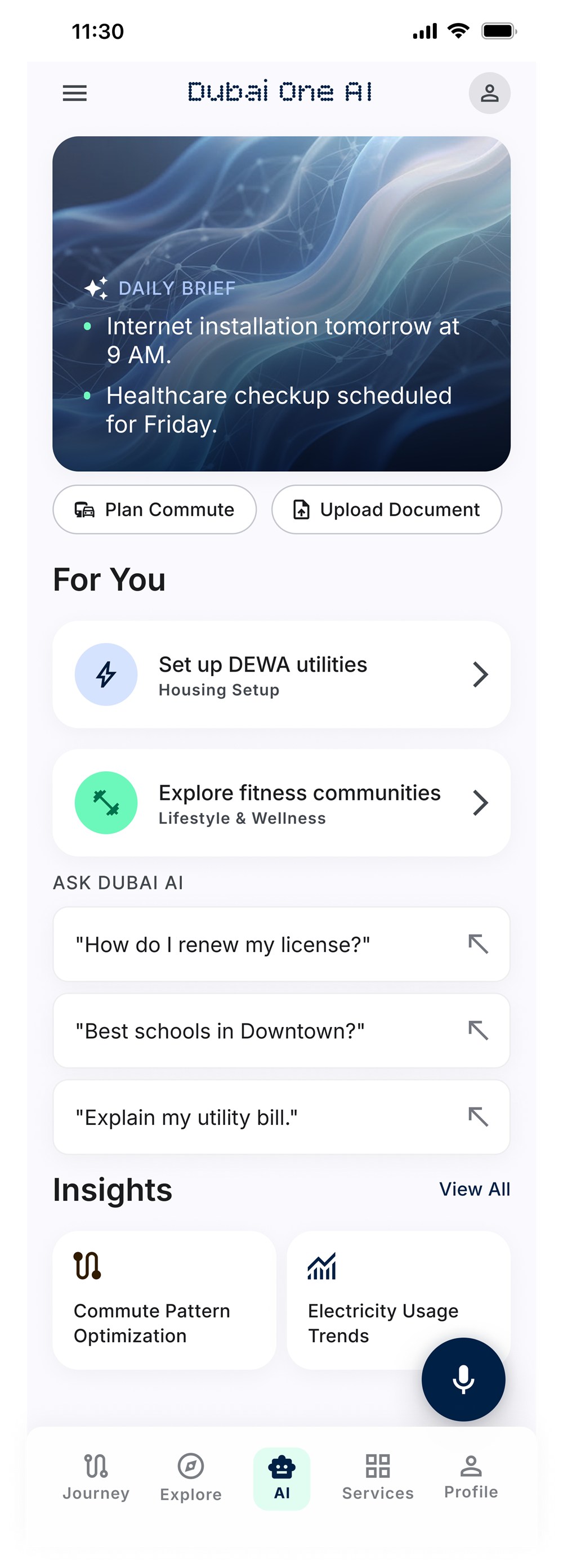
03 — Dubai AI Assistant
Contextual assistance and suggested actions
04 — Life Dashboard
Resident health across life modules
05 — AI Daily Briefing Detail-1
Daily briefing and reminders
06 — AI Personal Insights
Personal patterns and recommendations
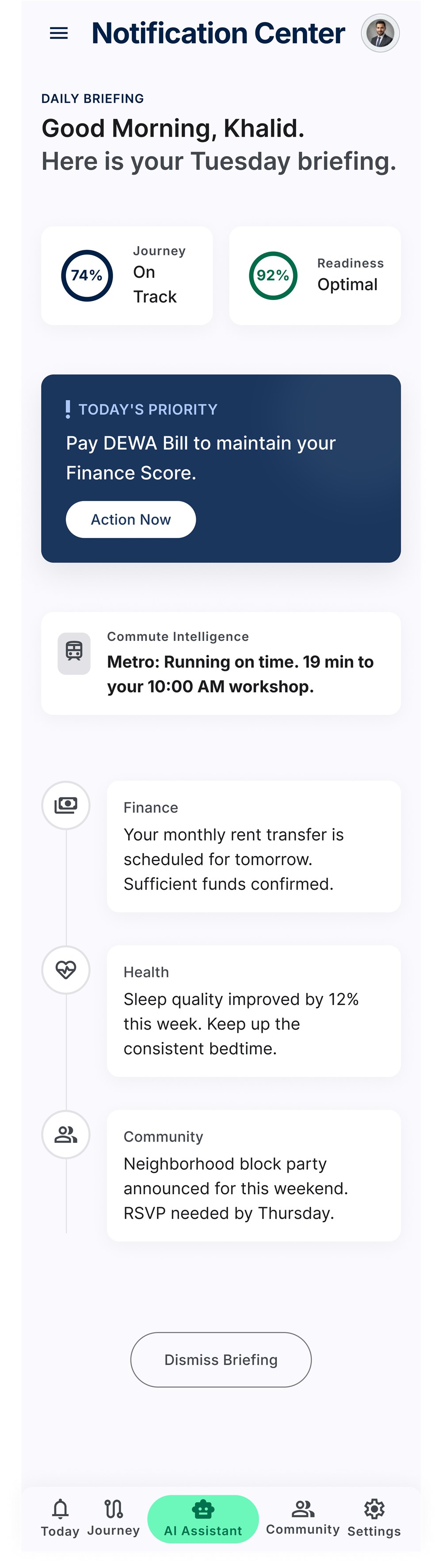
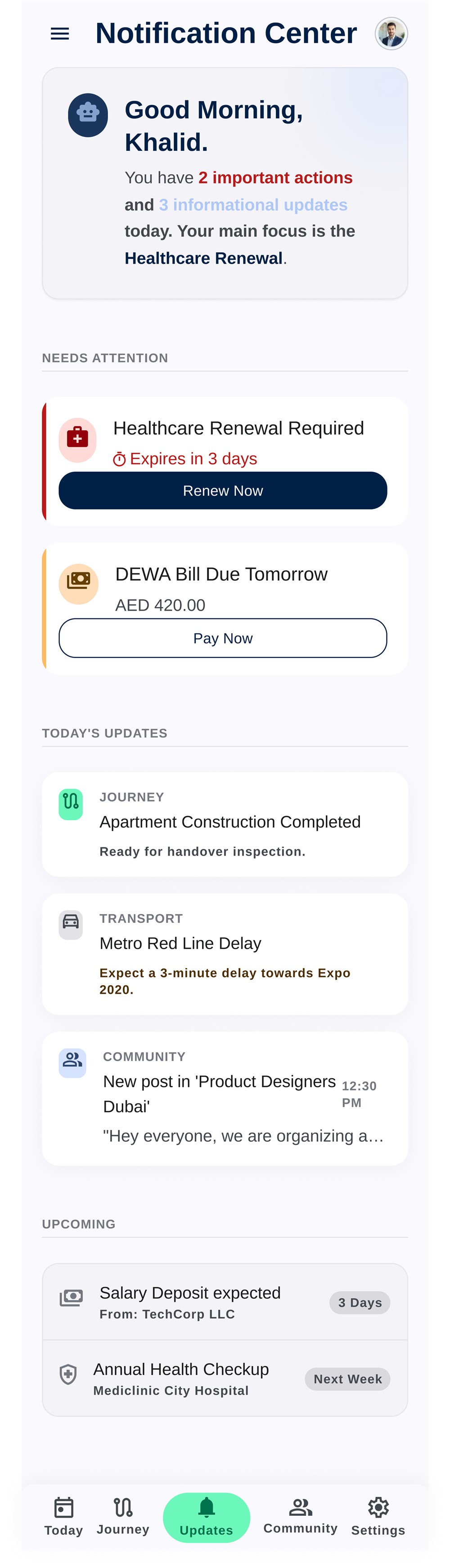
07 — Intelligent Notification Center
Alerts organized by priority
08 — Utilities Dashboard
Home services and utility status
Module 02
Housing
Turn the fragmented process of finding and moving into a home into one guided journey.
Search→Listing→Compare→Viewing→Lease→Move In
Design decision — a signed lease automatically proposes the next dependent steps, rather than leaving them to be discovered.
01 — Housing Dashboard
Property discovery and housing overview
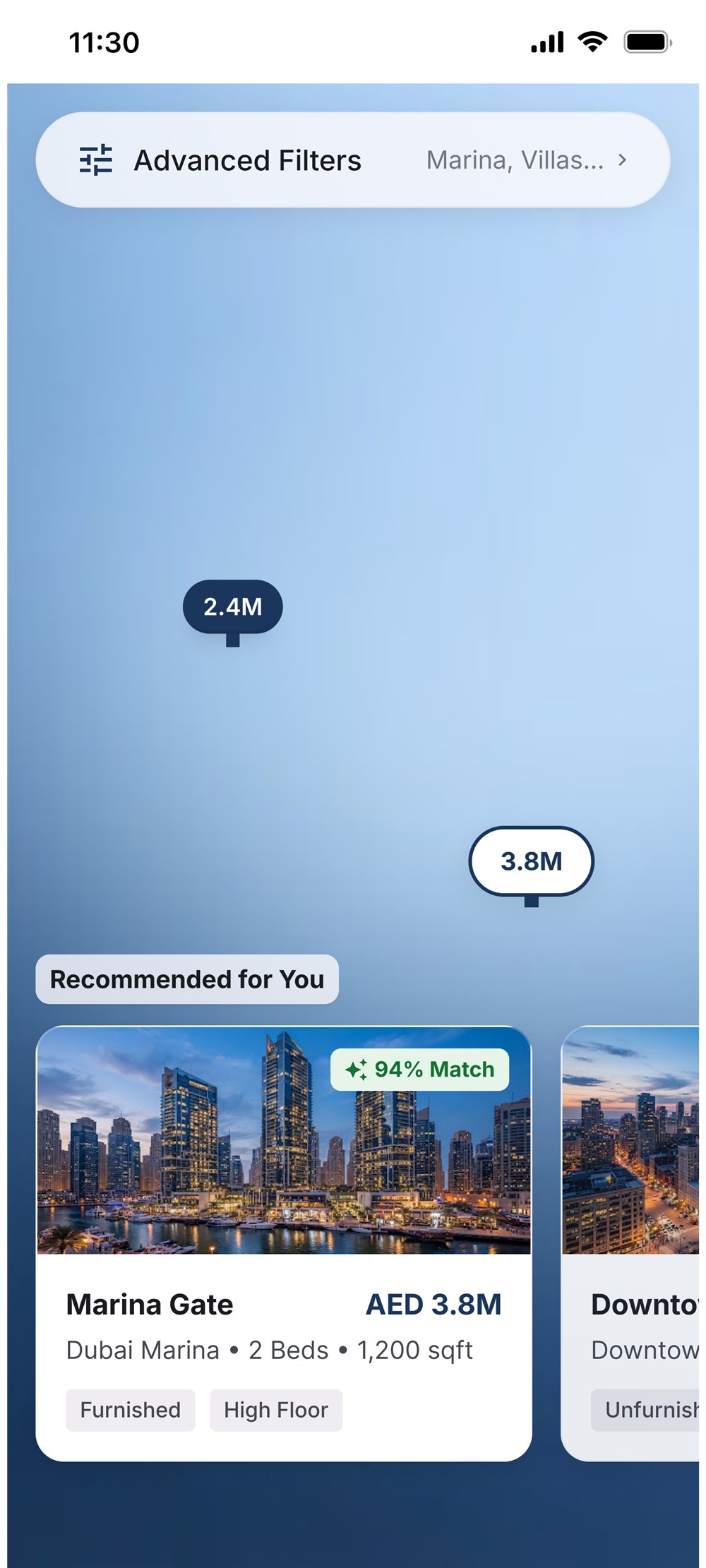
02 — Search
Search properties by location
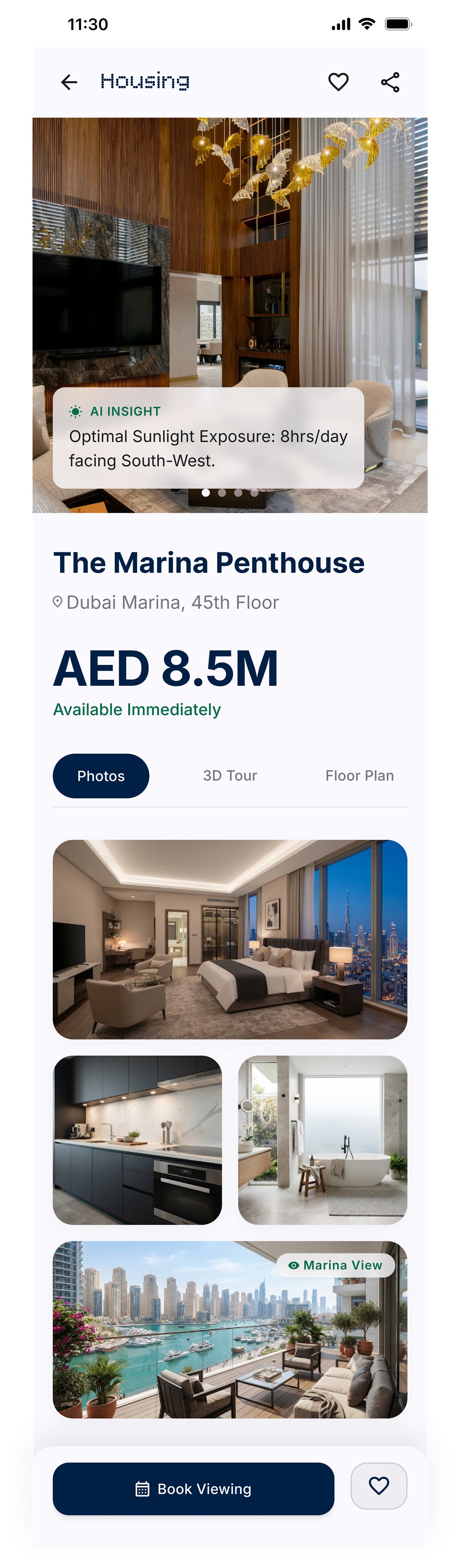
03 — Property Detail View
Property features and details
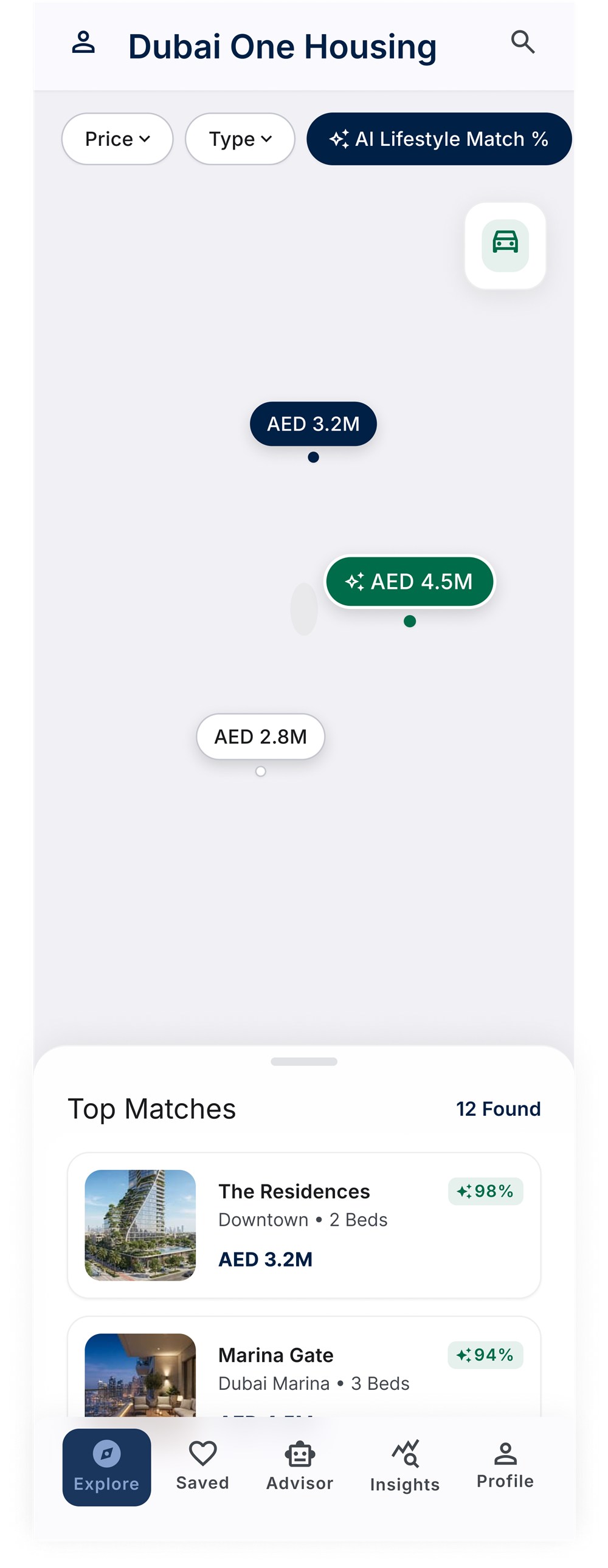
04 — Interactive Map Search
Explore listings on a map
05 — Property Gallery
A closer look inside the property
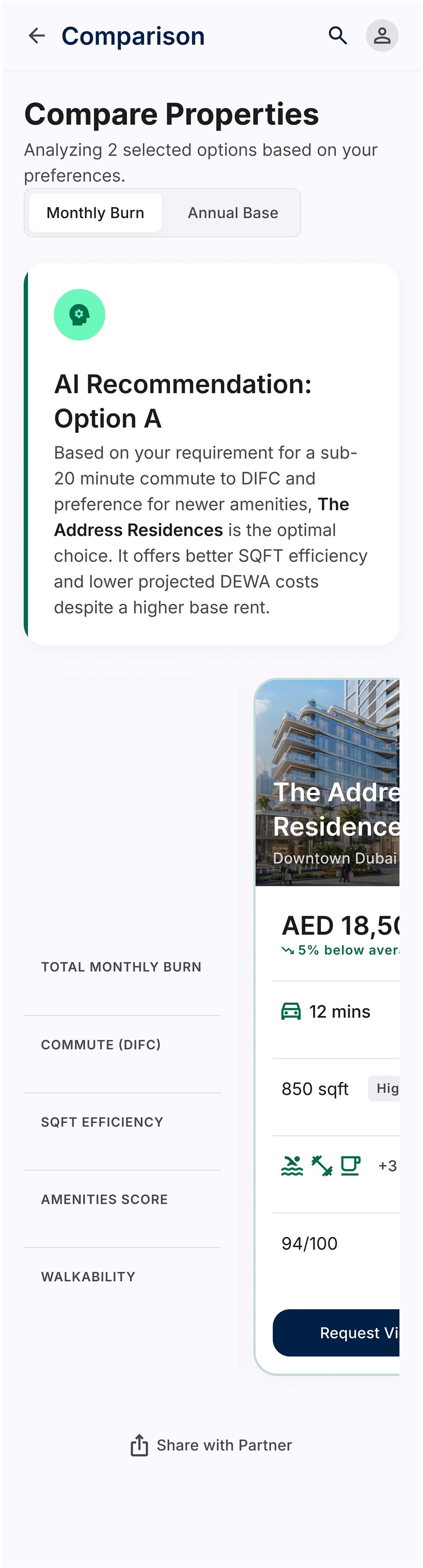
06 — AI Property Comparison
Compare shortlisted properties
07 — AI Housing Advisor
Guidance for finding a home
08 — Neighborhood Intelligence
Local amenities and neighborhood context
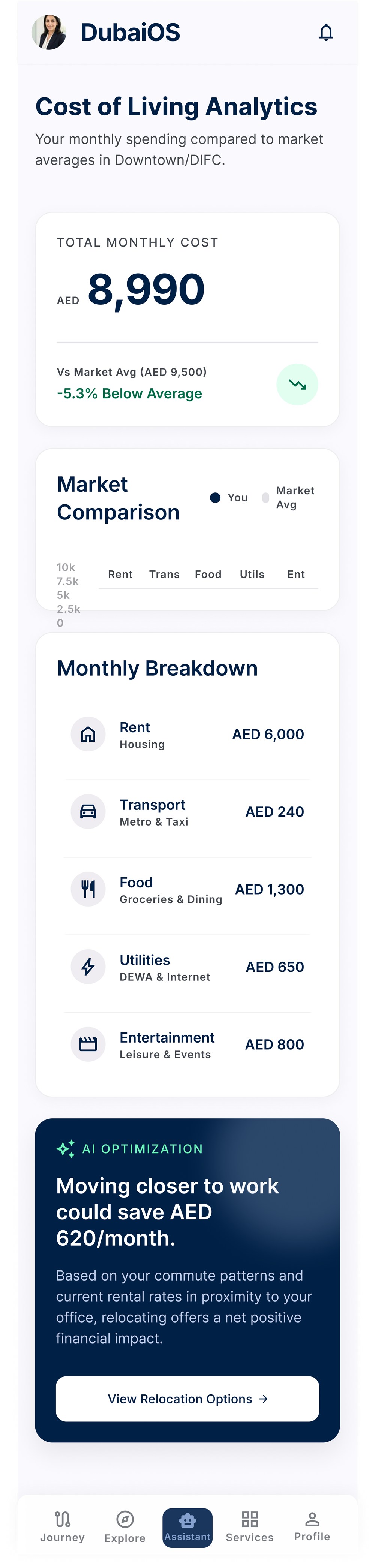
09 — Cost of Living Analytics
Living costs by category
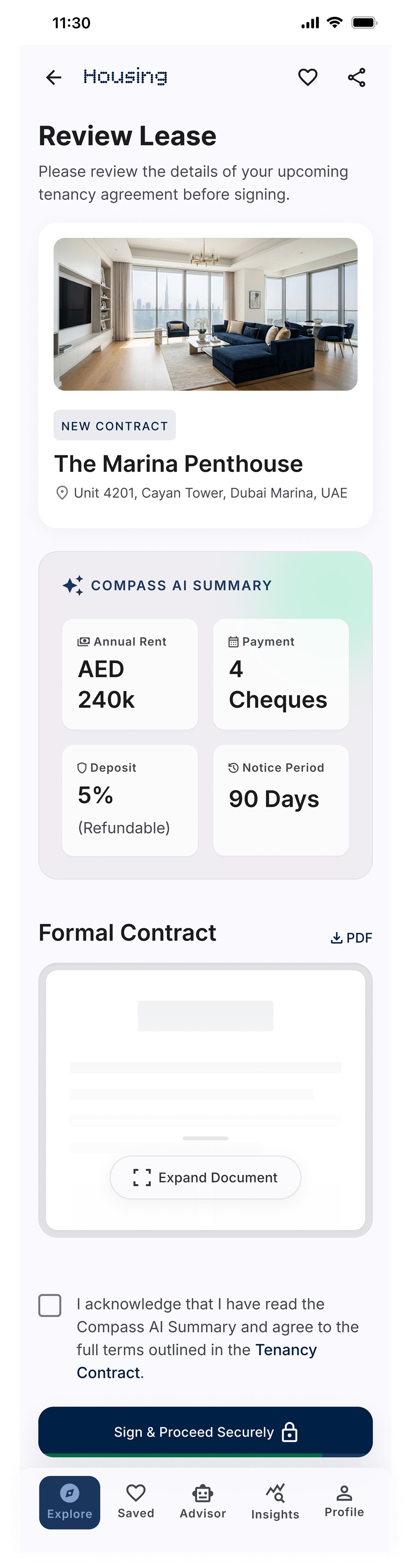
10 — Lease Review
Review rental terms and documents
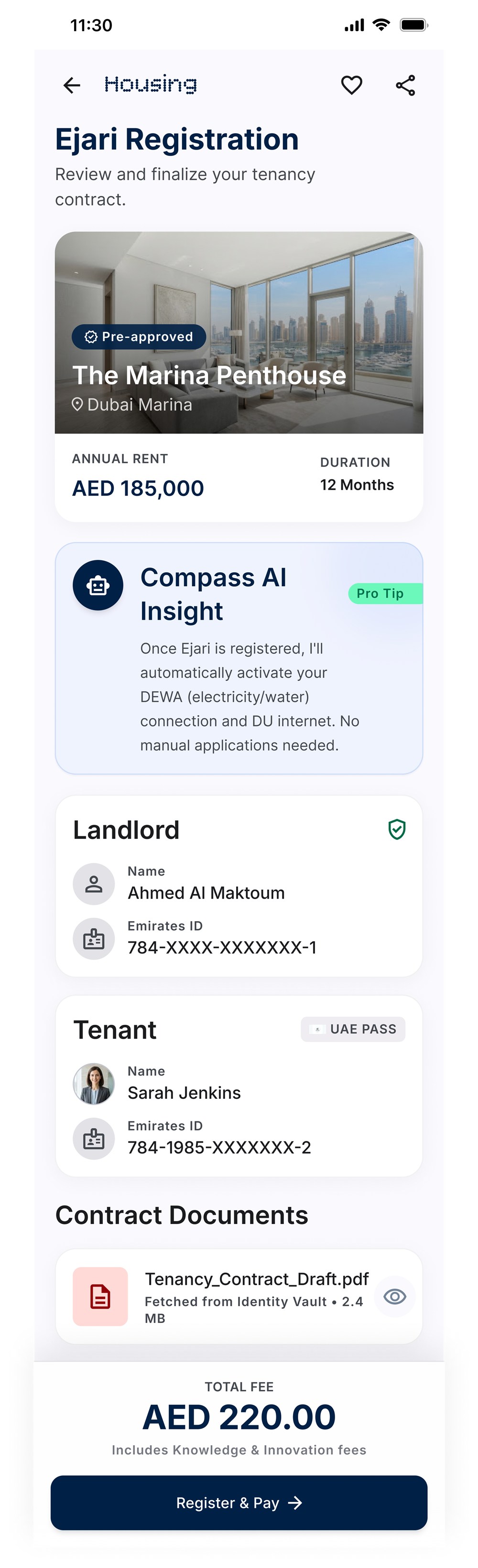
11 — Ejari Registration
Property registration and fees
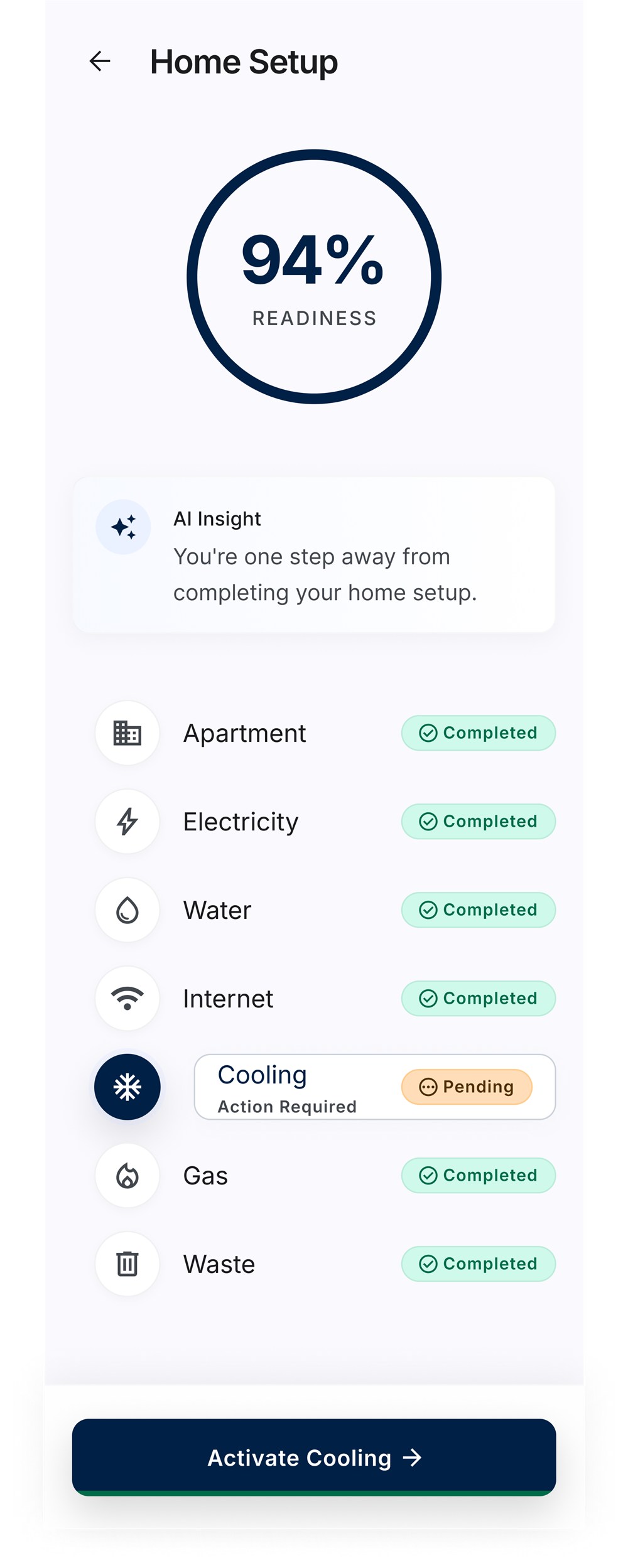
12 — Home Setup Progress
Track move-in service setup
Module 03
Identity
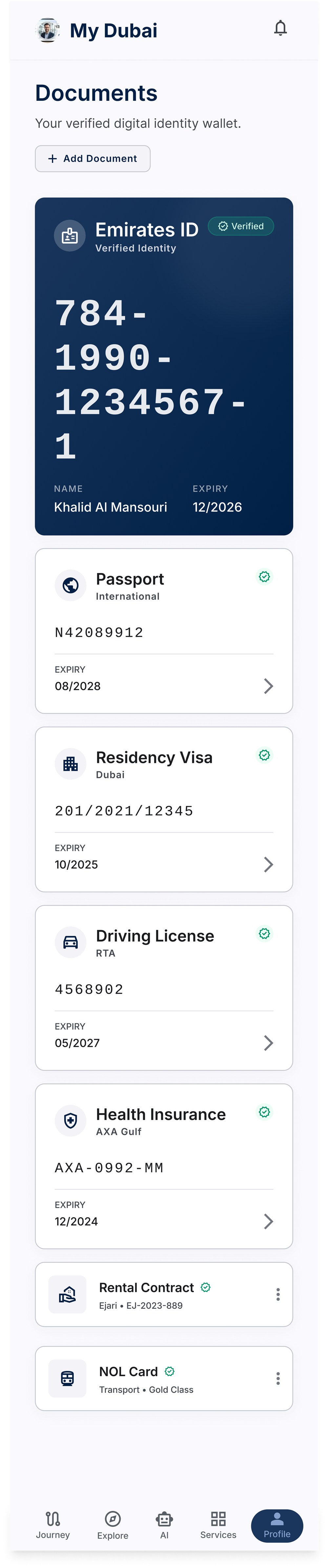
Bring visa, Emirates ID, and residency documents into a single wallet instead of three separate portals.
Design decision — status updates propagate automatically, so nothing has to be re-uploaded or re-checked.
01 — Identity Dashboard
Visa and document status overview
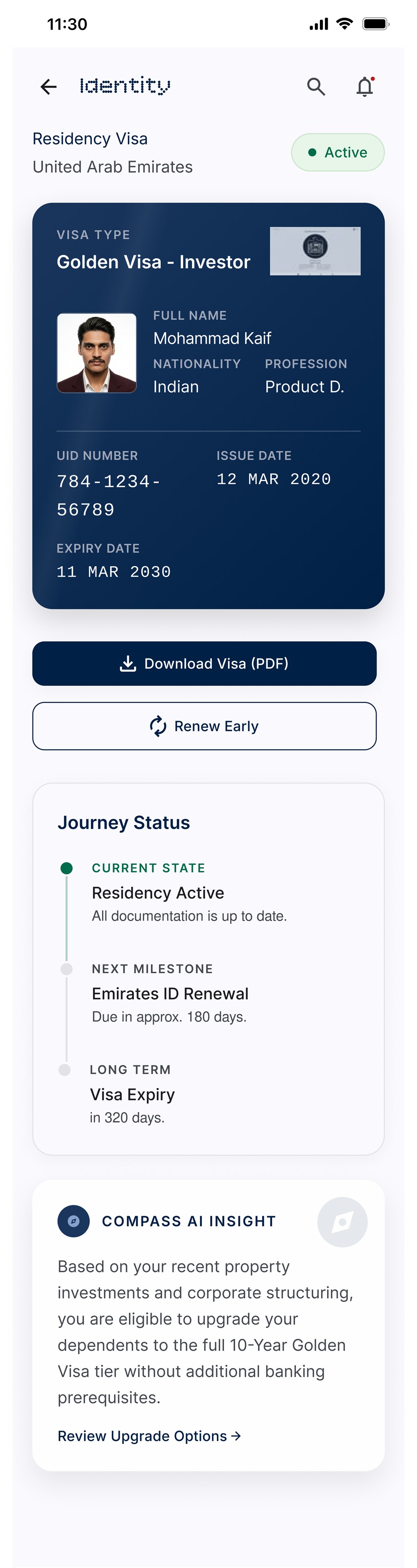
02 — Visa Status
Residency details and journey status
03 — Emirates ID Tracking
Track identity verification milestones
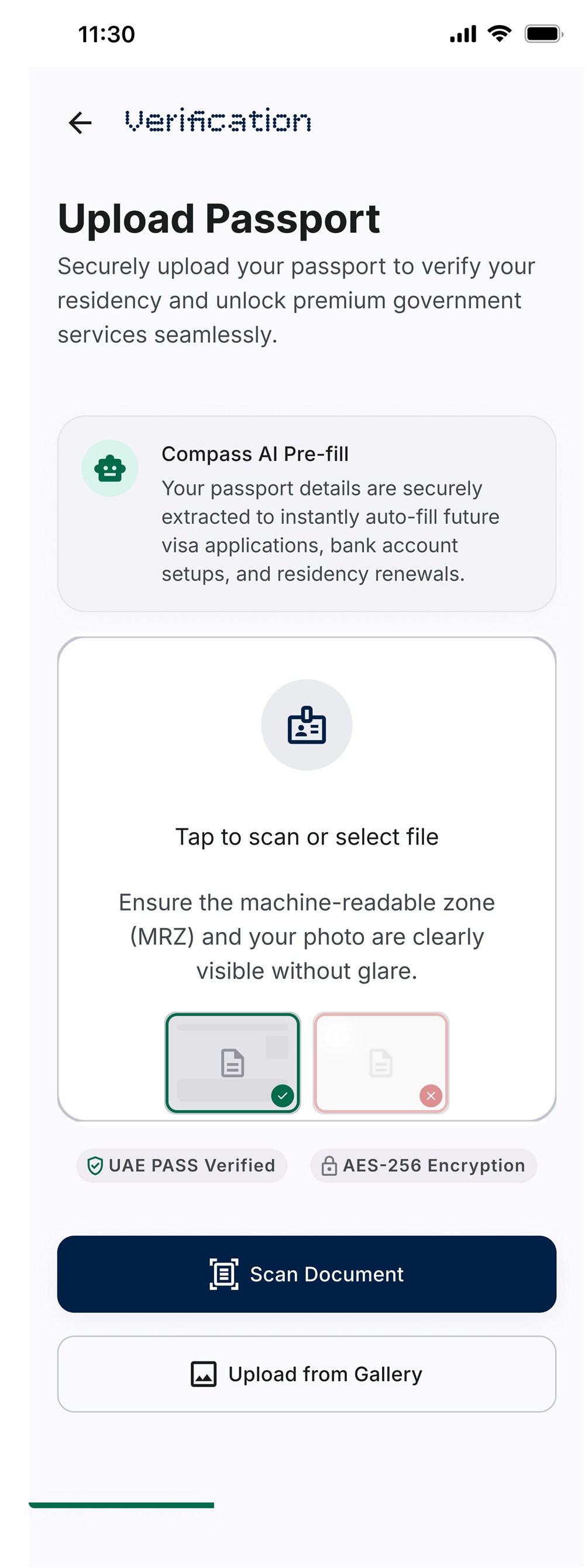
04 — Passport upload
Guided passport document capture
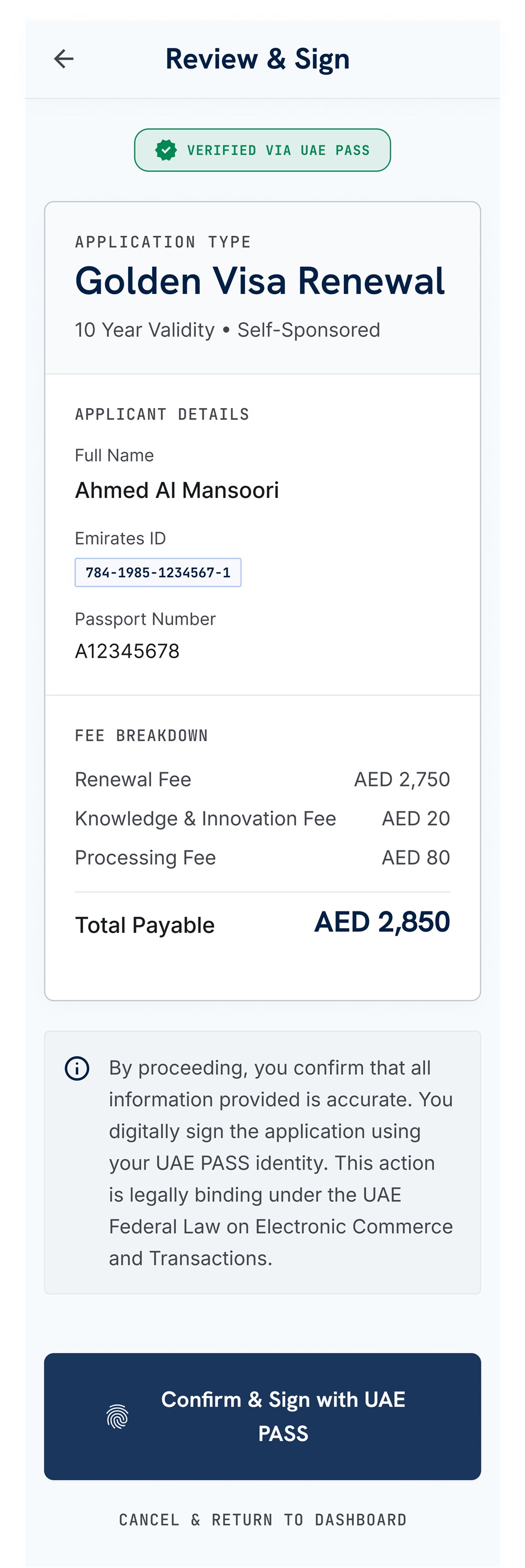
05 — Visa Renewal Verification
Review renewal information
06 — Documents Wallet
Identity and resident documents
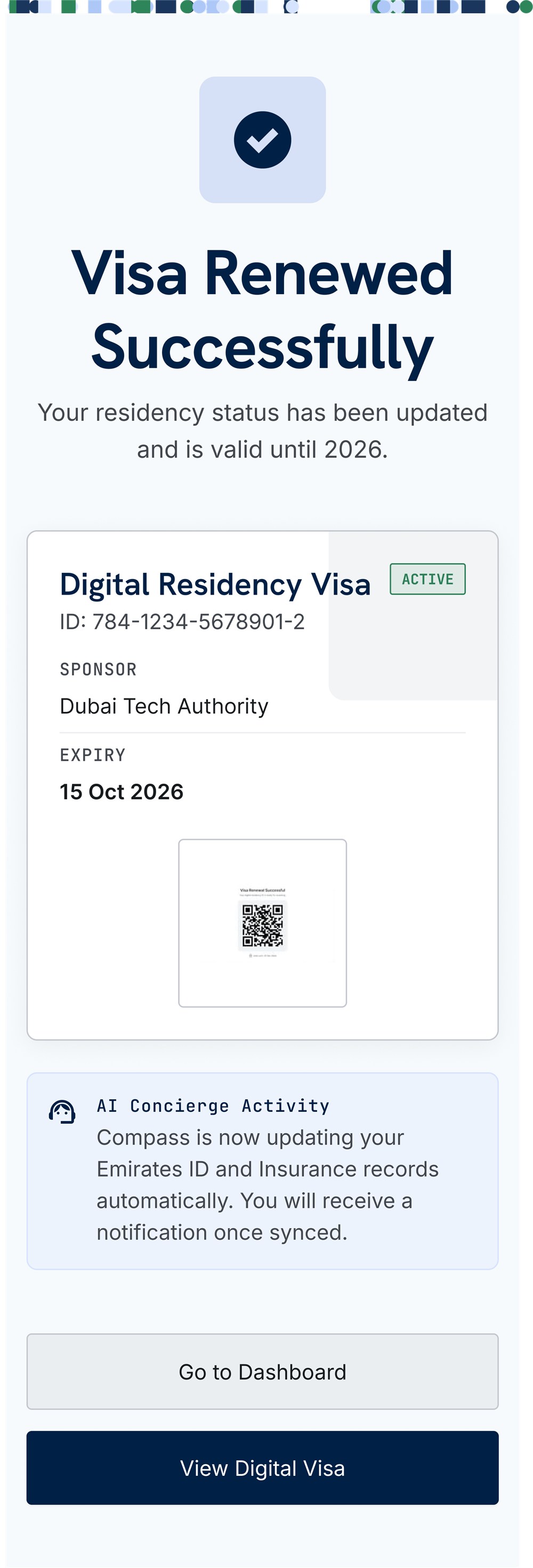
07 — Visa Renewal Success
Renewal completion and digital visa
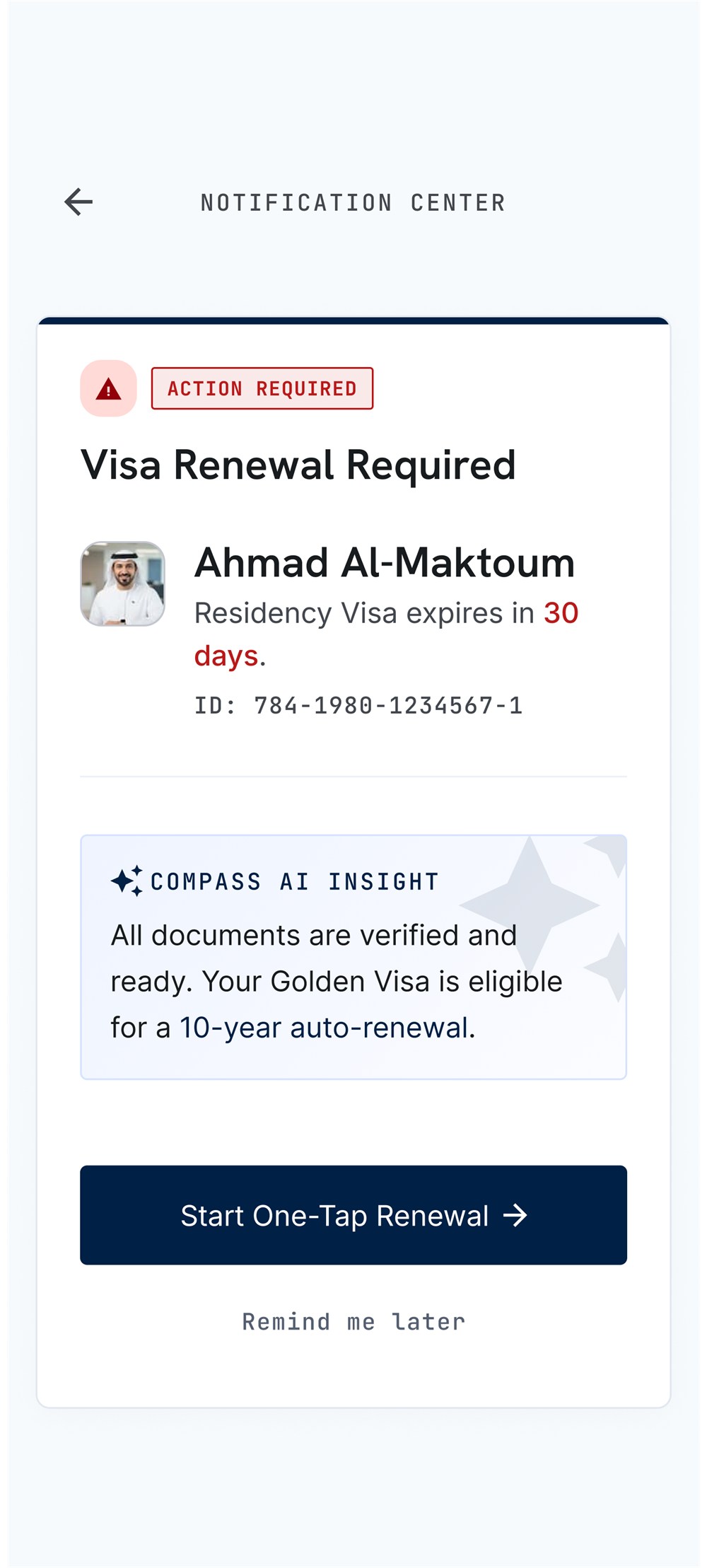
08 — Residency Visa Renewal Alert
Upcoming residency renewal
Module 04
Smart Mobility
A conceptual mobility ecosystem covering Dubai Metro, bus, ride-hailing, parking, and Nol balance in one map layer.
Presented as a concept exploration — this walkthrough does not assume or claim real integration with RTA or Nol systems.
Plan→Navigate→Pay→Track→Learn
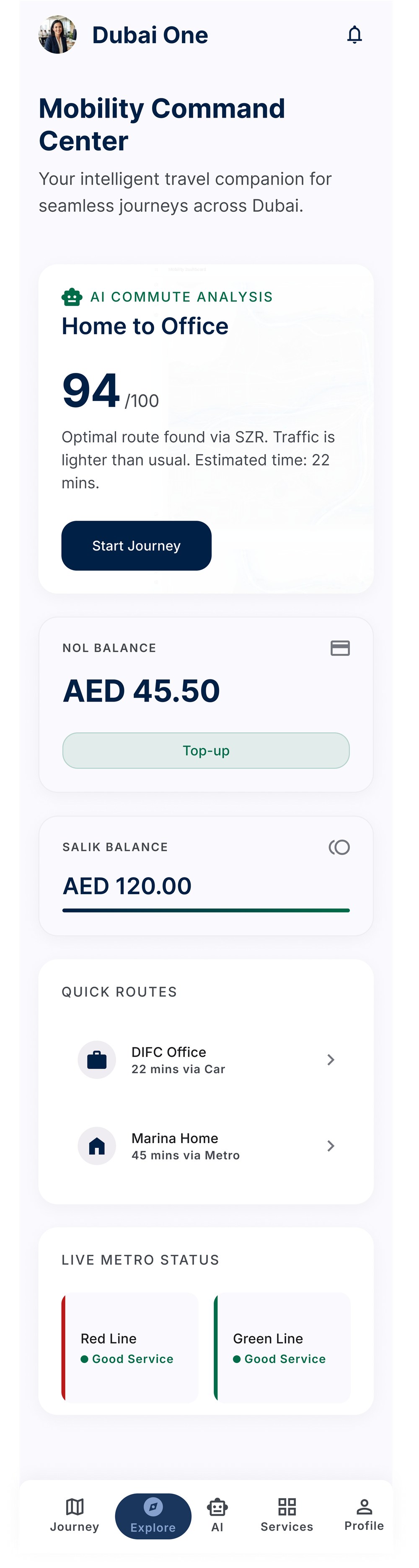
01 — Mobility Dashboard
Commute, transport and travel overview
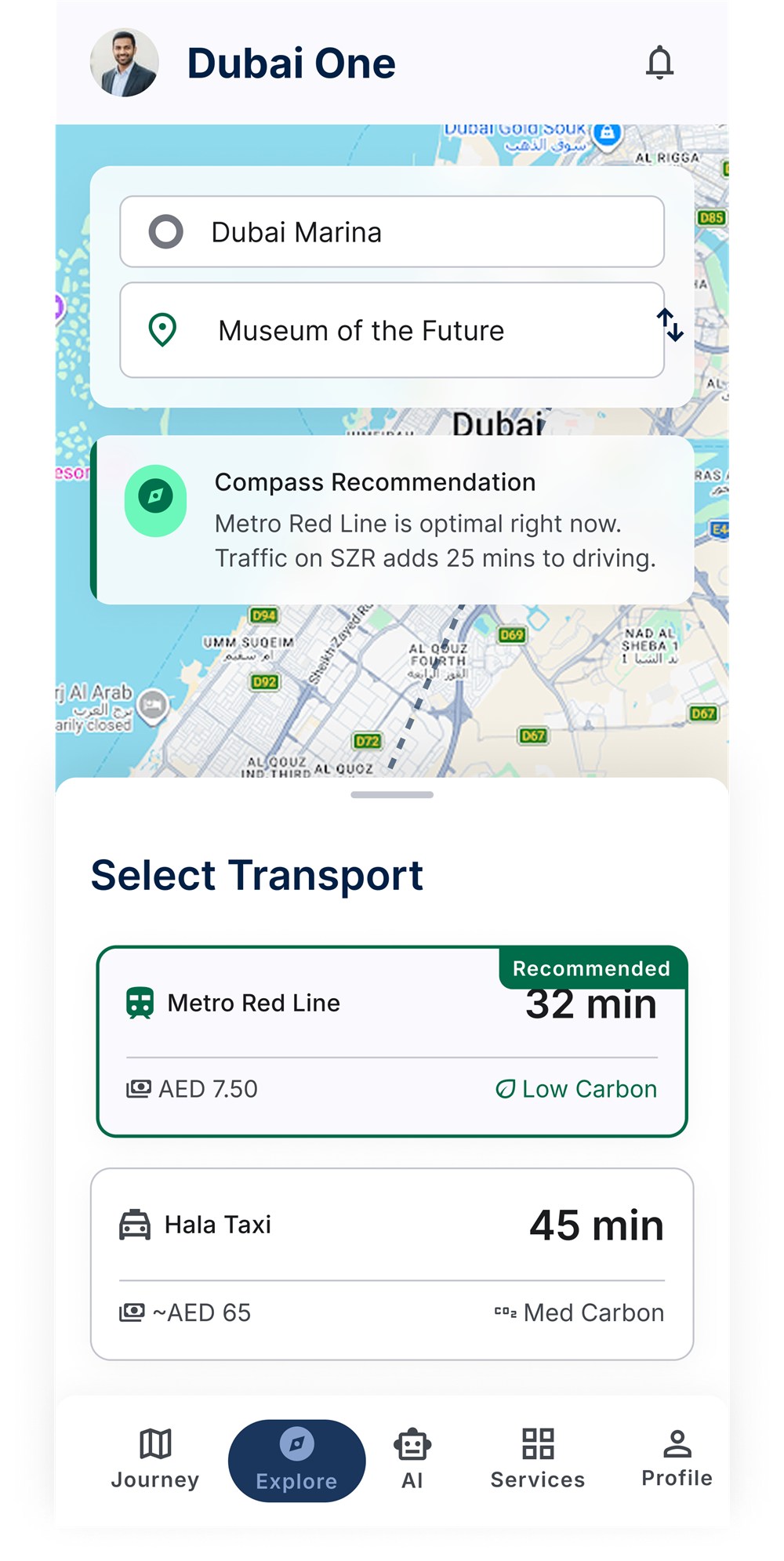
02 — Route Planner
Compare transport options for a route
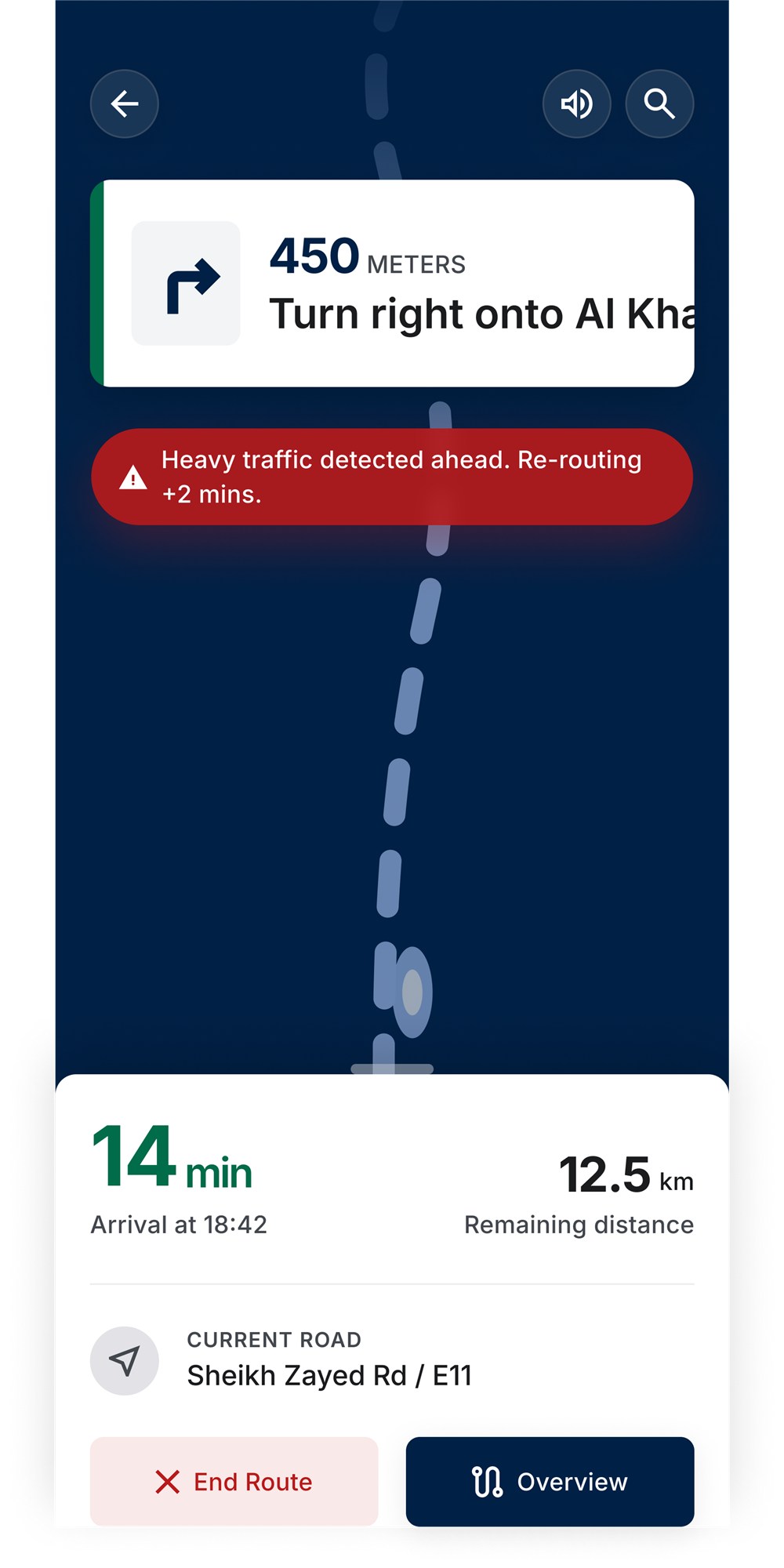
03 — Live Navigation
Directions and journey updates
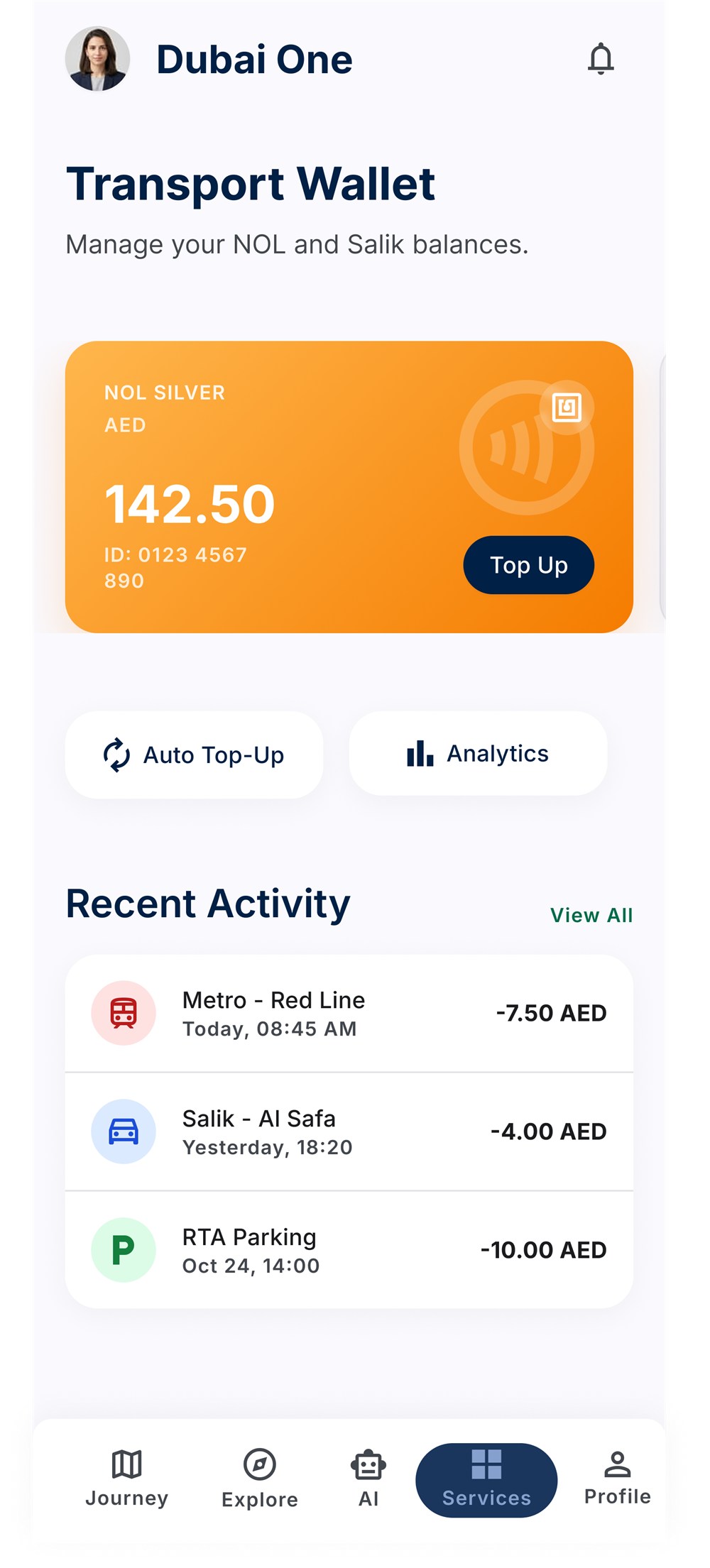
04 — NOL & Salik Wallet
Transport balances and recent activity
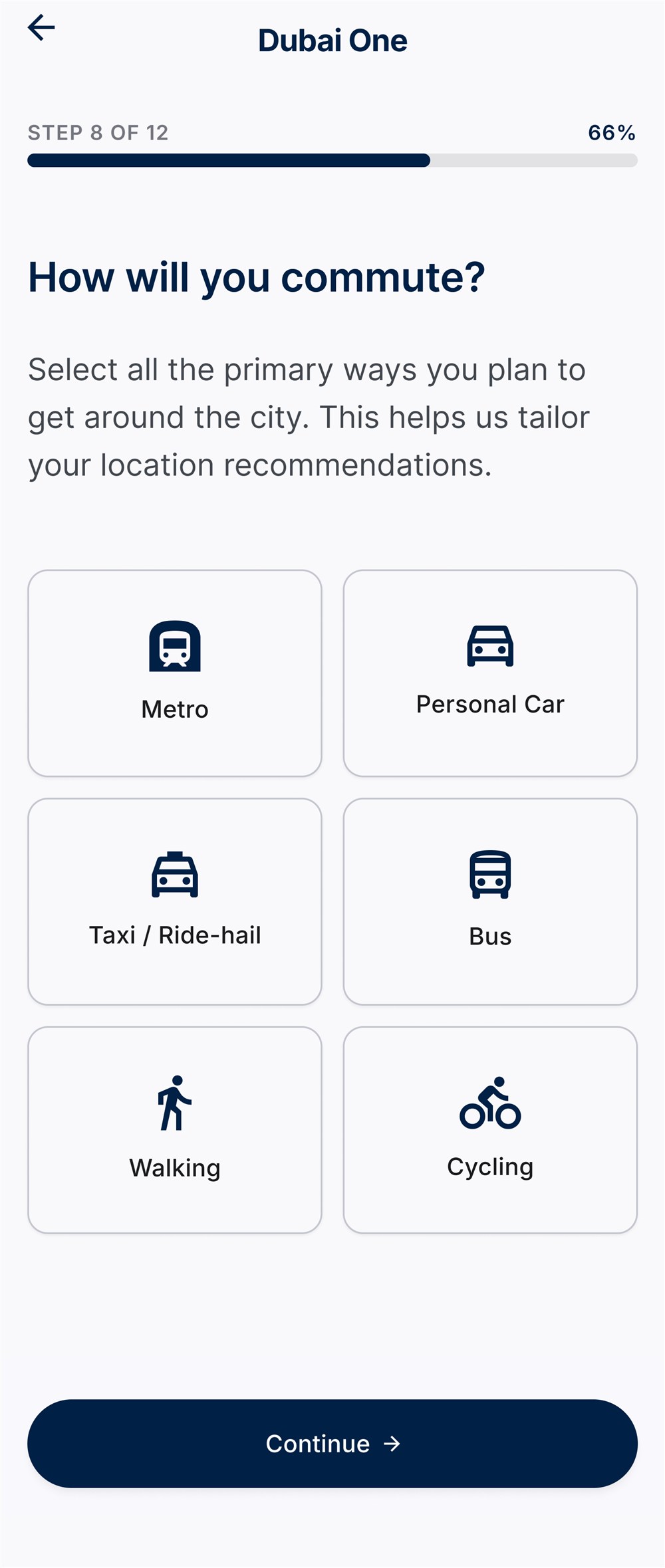
05 — Transportation Preferences
Choose preferred transport modes
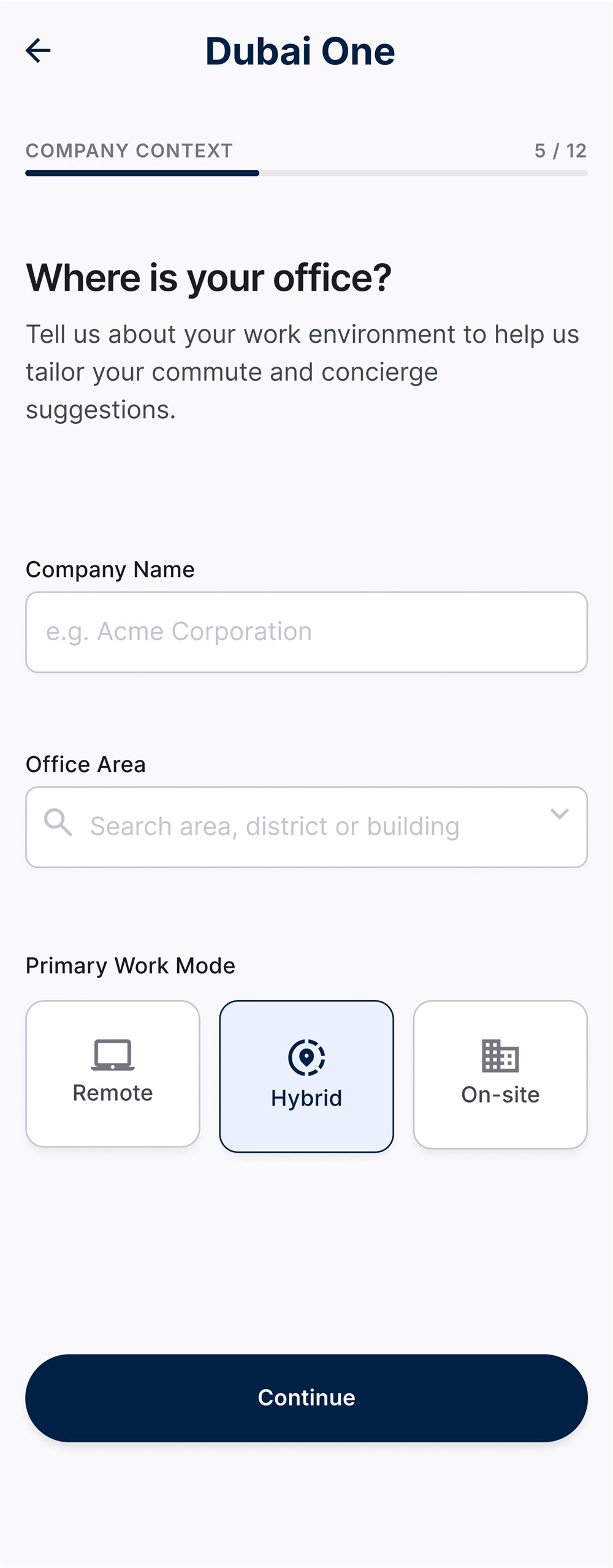
06 — Workplace & Commute Context
Set workplace and commute context
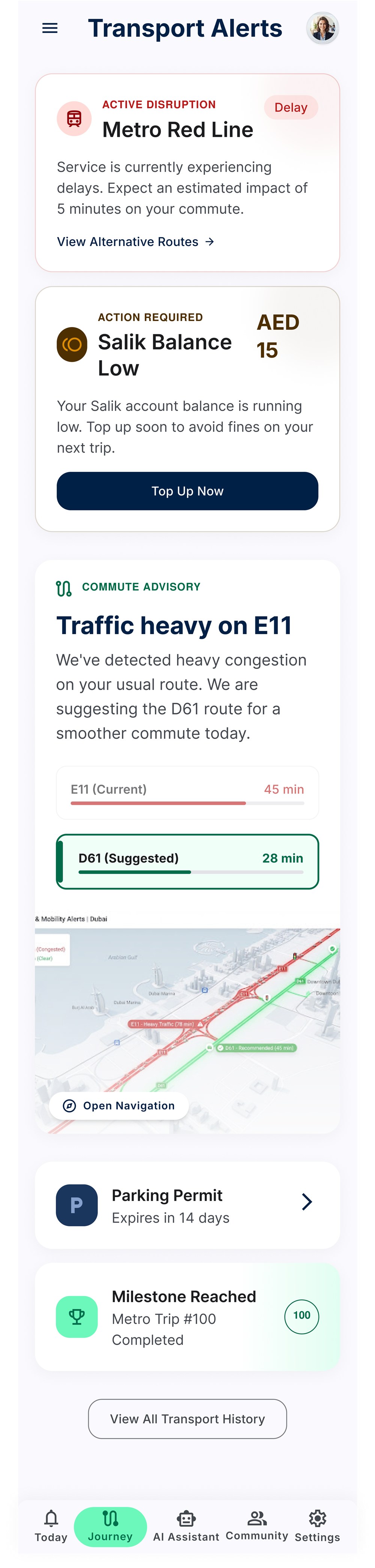
07 — Transport & Mobility Alerts
Travel disruptions and transport alerts
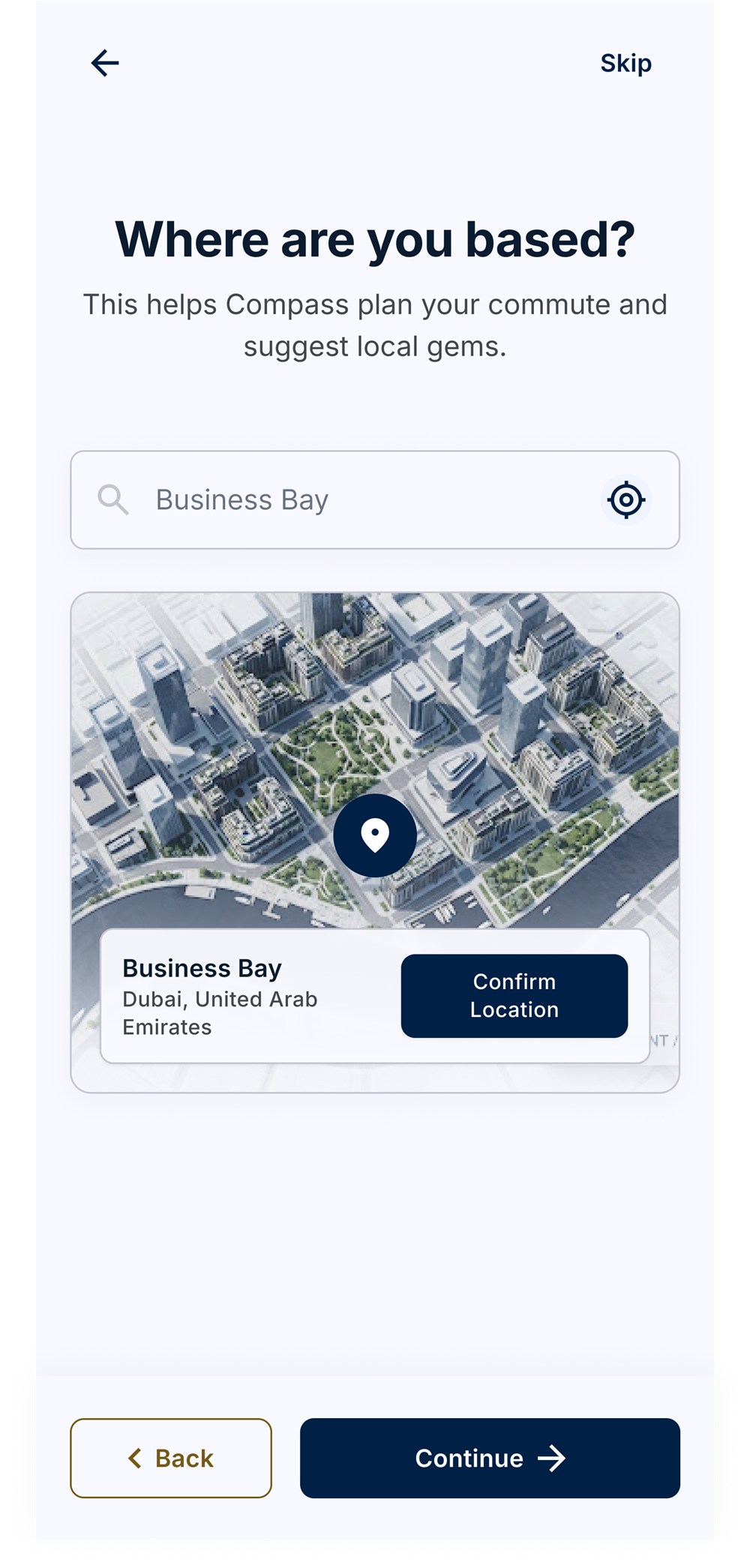
08 — Local Context
Set your location for local guidance
Module 05
Finance
Forecast rent, utilities, and recurring bills ahead of time instead of reacting to them.
Design decision — a two-month forward view, so nothing arrives as a surprise on payday.
01 — Financial Dashboard
Financial overview and upcoming bills
02 — Monthly Budget & Tracking
Budget and spending categories
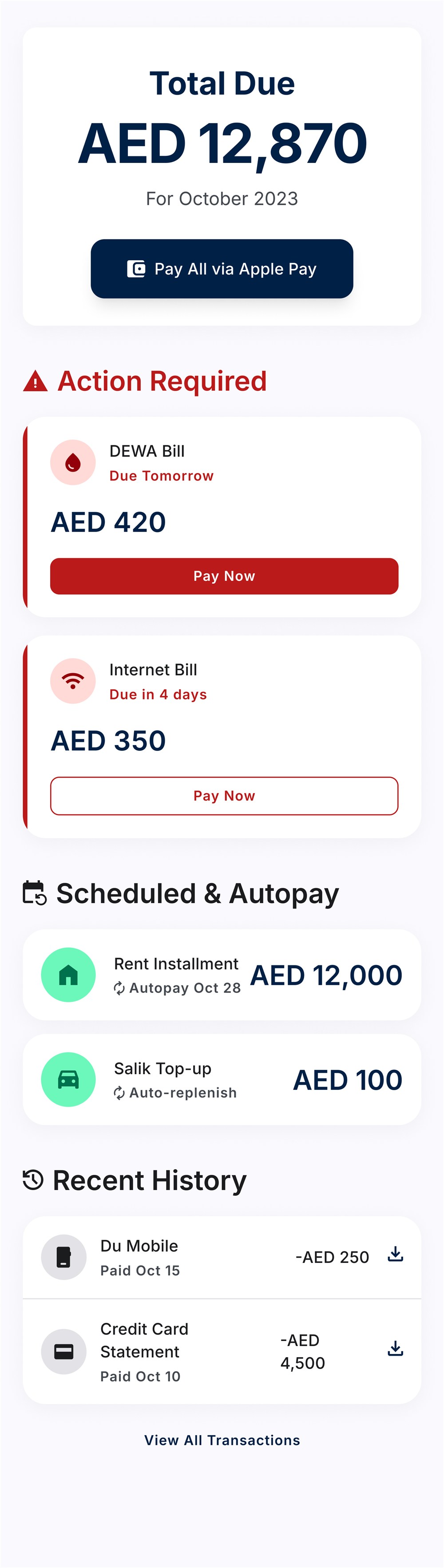
03 — Bills & Payments Alerts
Due payments and recent activity
04 — Cost of Living Analytics
Living costs by category
05 — Financial Health Score
Financial wellbeing and recommendations
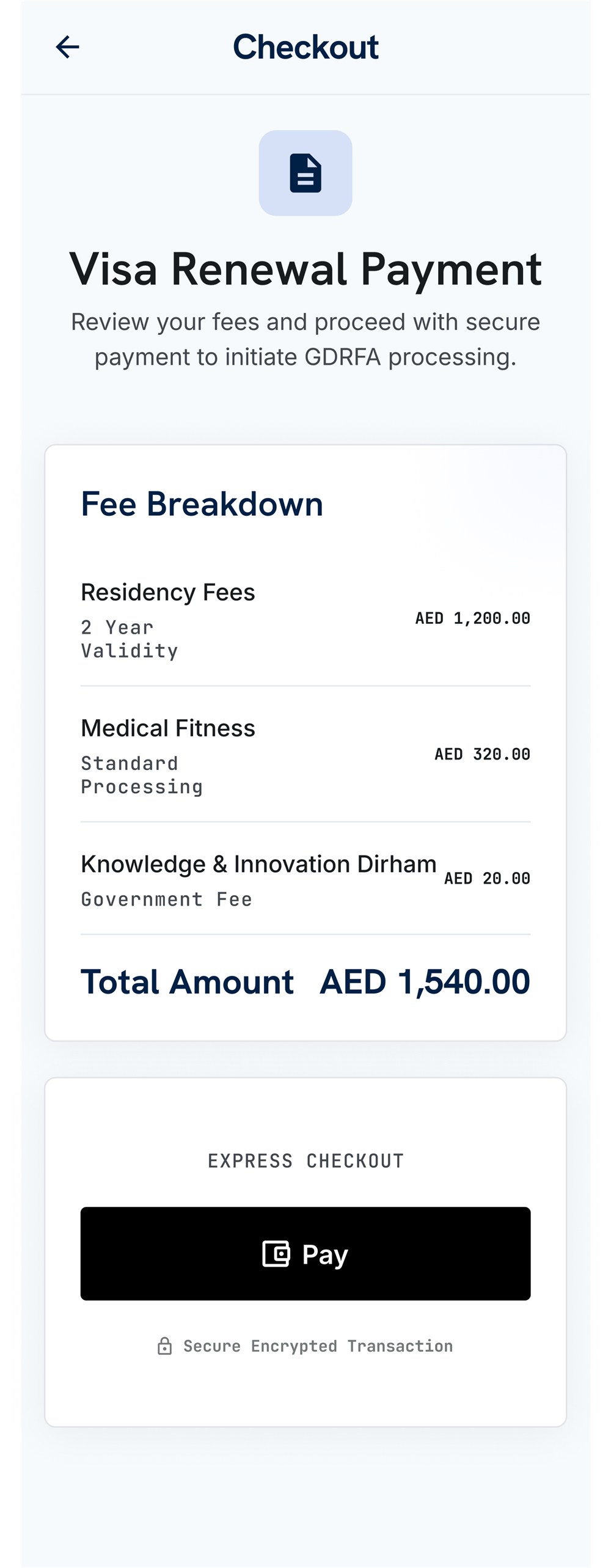
06 — Visa Payment & Processing
Renewal fee breakdown and checkout
Module 06
Healthcare
Connect insurance, appointments, and prescriptions instead of treating each as a separate errand.
Design decision — insurance coverage is visible at the point of booking, not after.
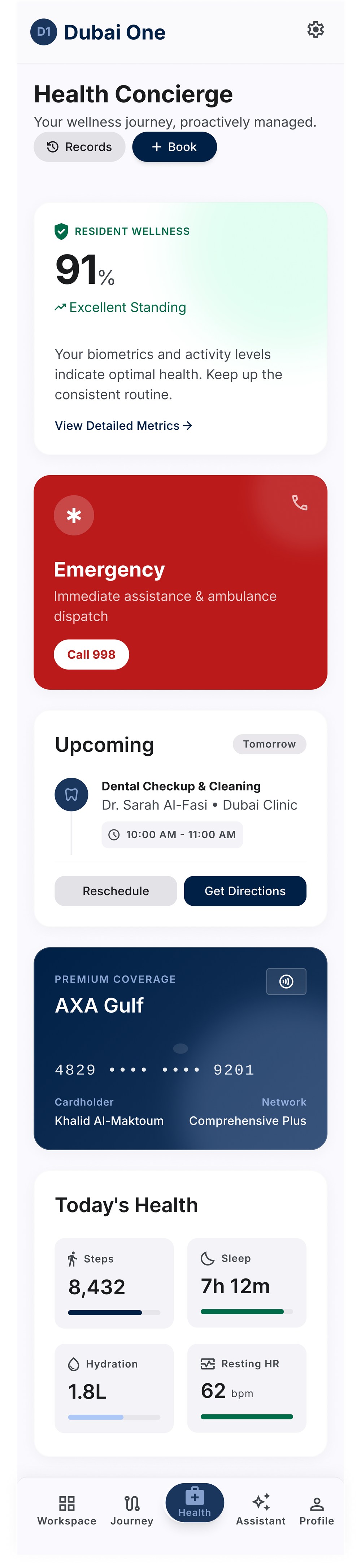
01 — Healthcare Dashboard
Health, appointments and coverage
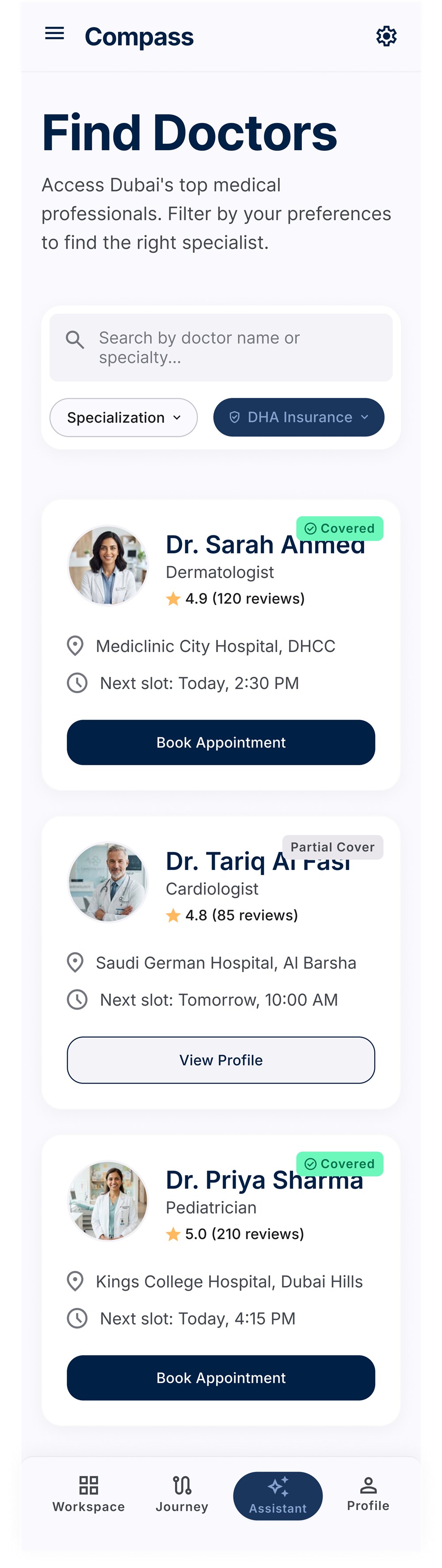
02 — Find Doctors
Browse doctors and specialties
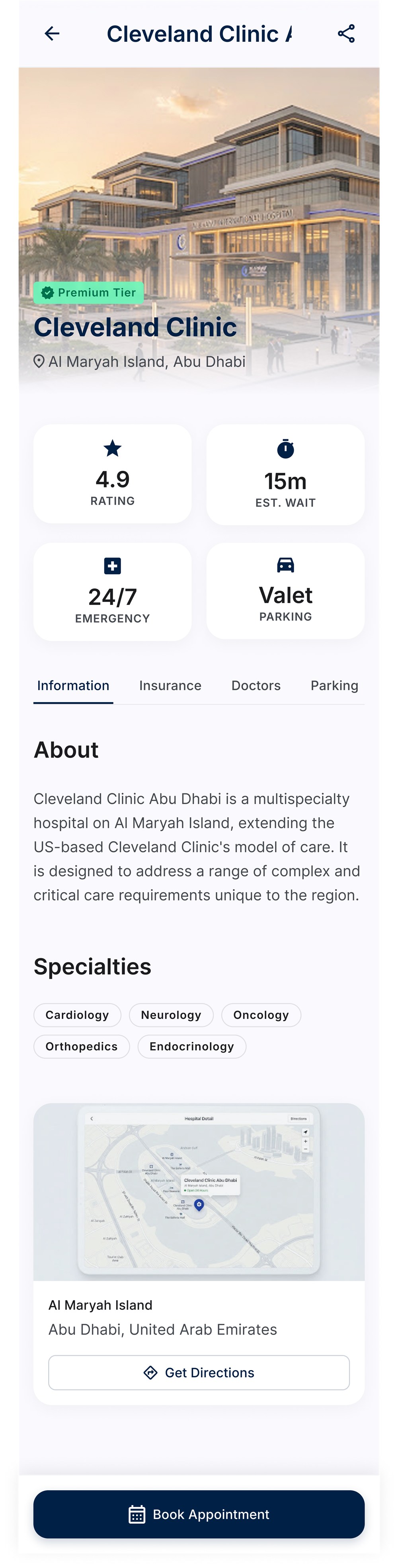
03 — Hospital Detail
Facility details and location
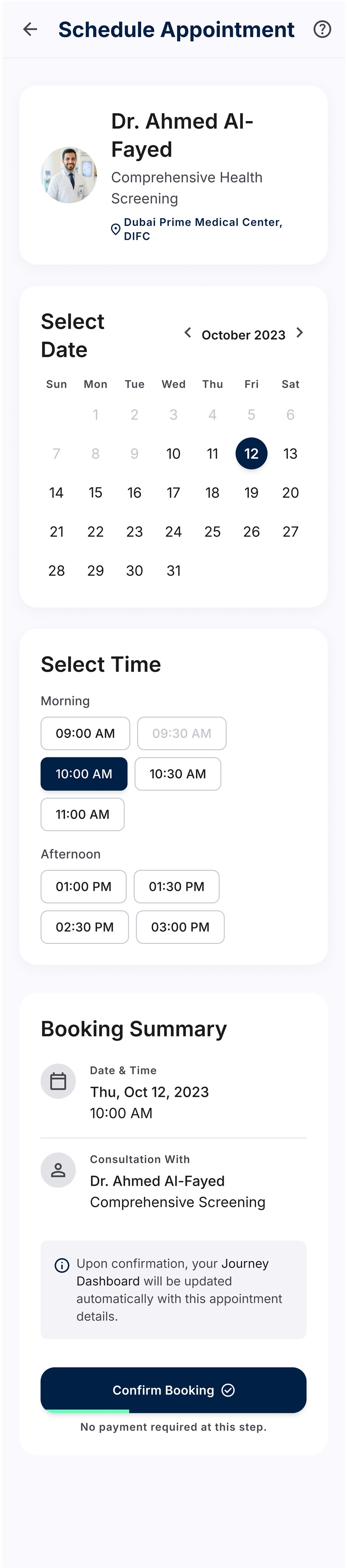
04 — Book Appointment
Choose an appointment date and time
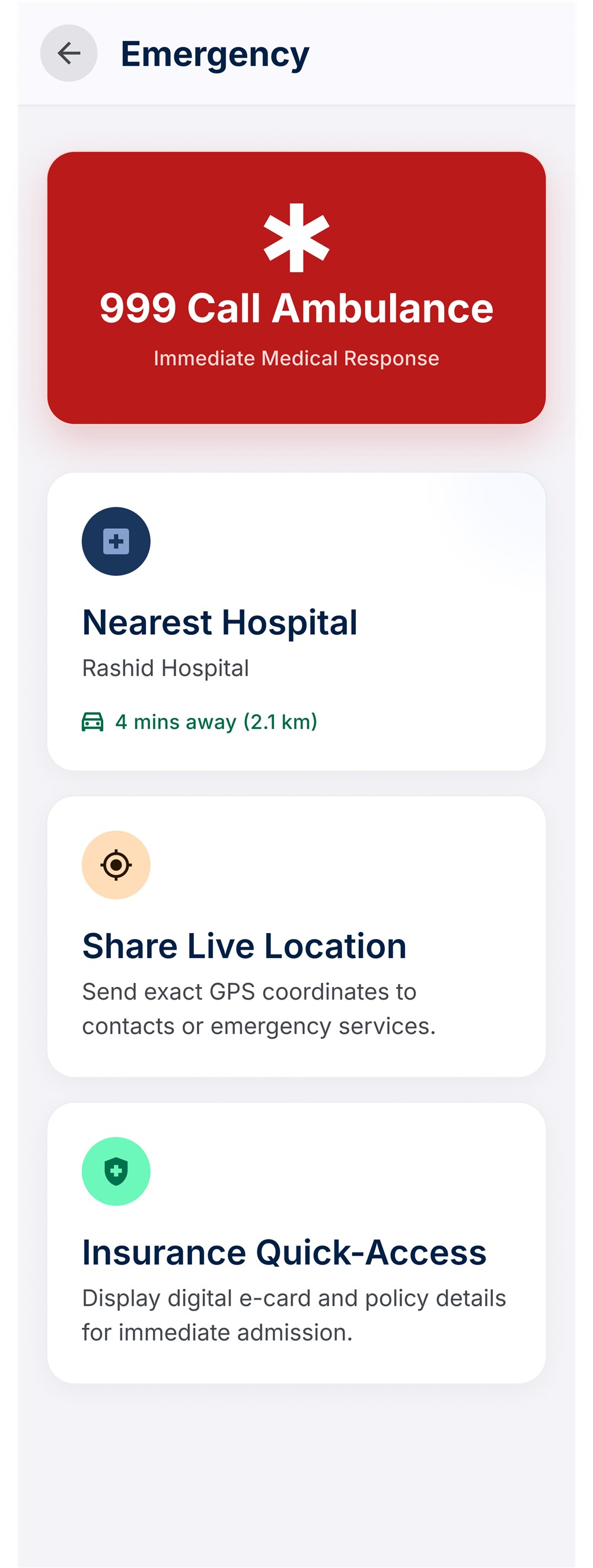
05 — Emergency Assistance
Emergency contacts and quick access
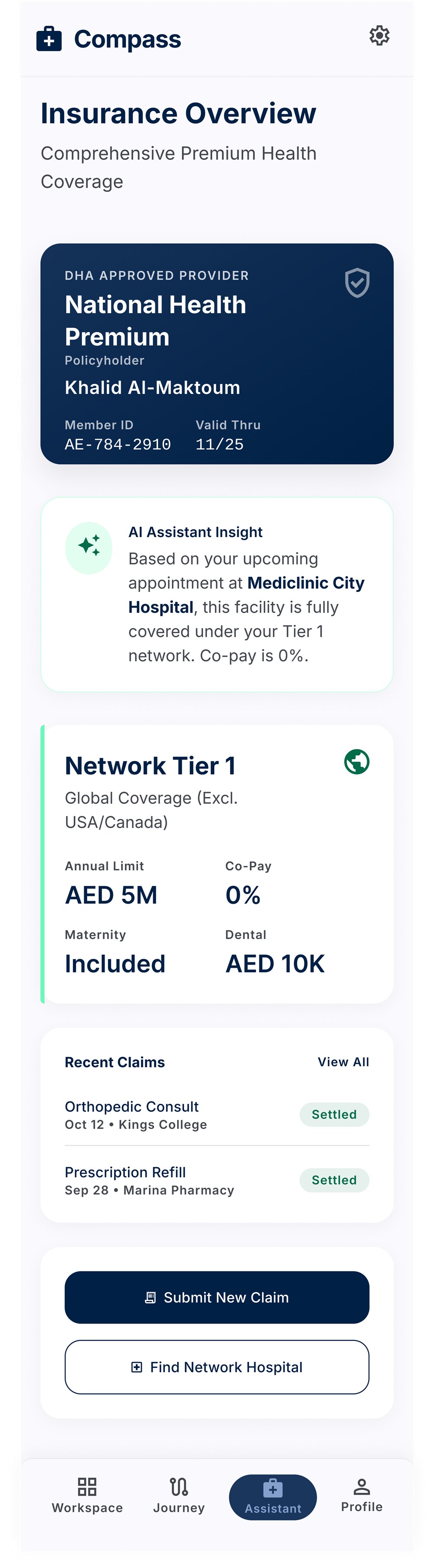
06 — Insurance Overview
Coverage details and network information
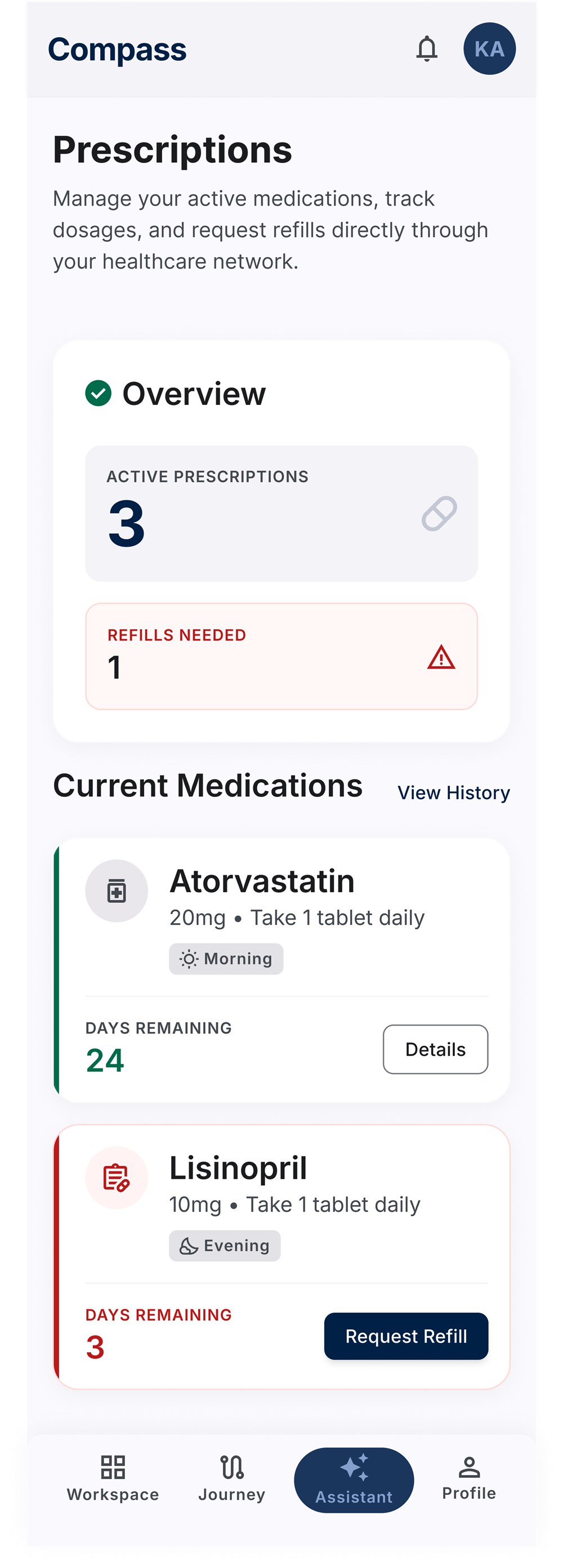
07 — Prescriptions
Current medication and refill details
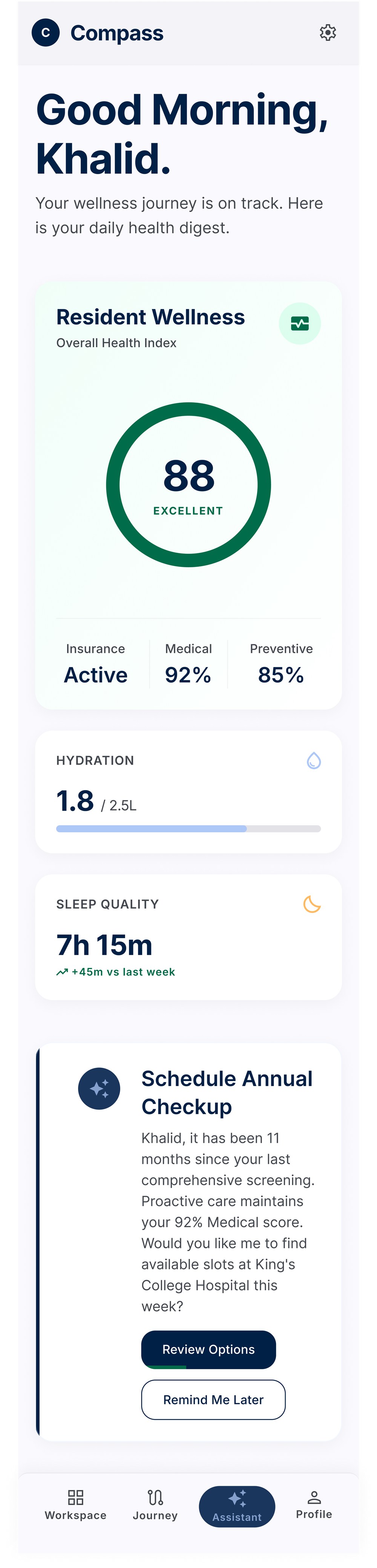
08 — Wellness Dashboard
Wellness metrics and daily guidance
Module 07
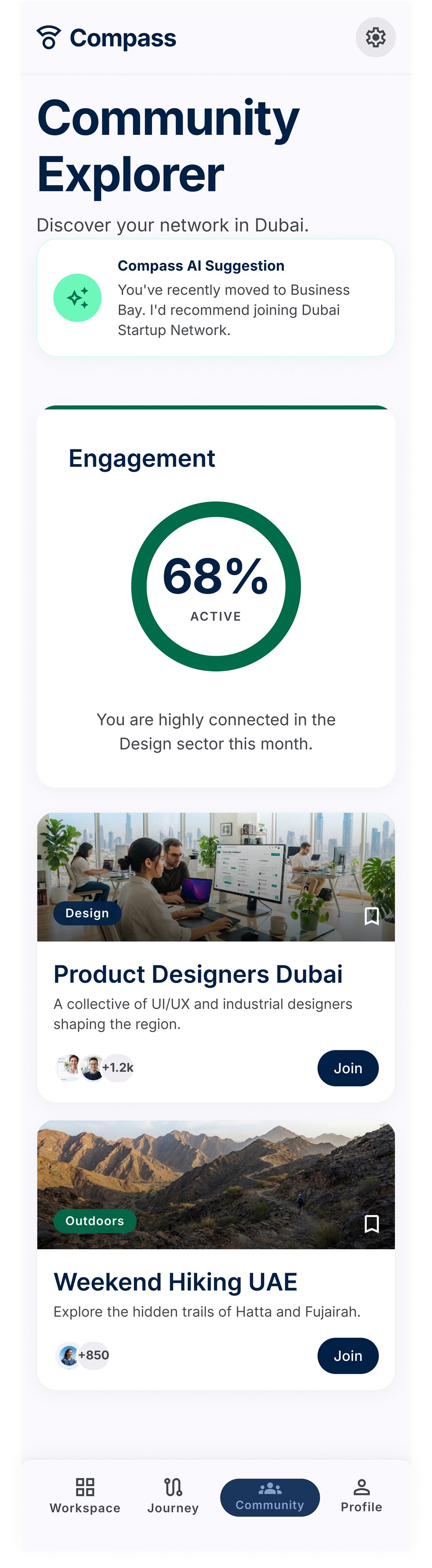
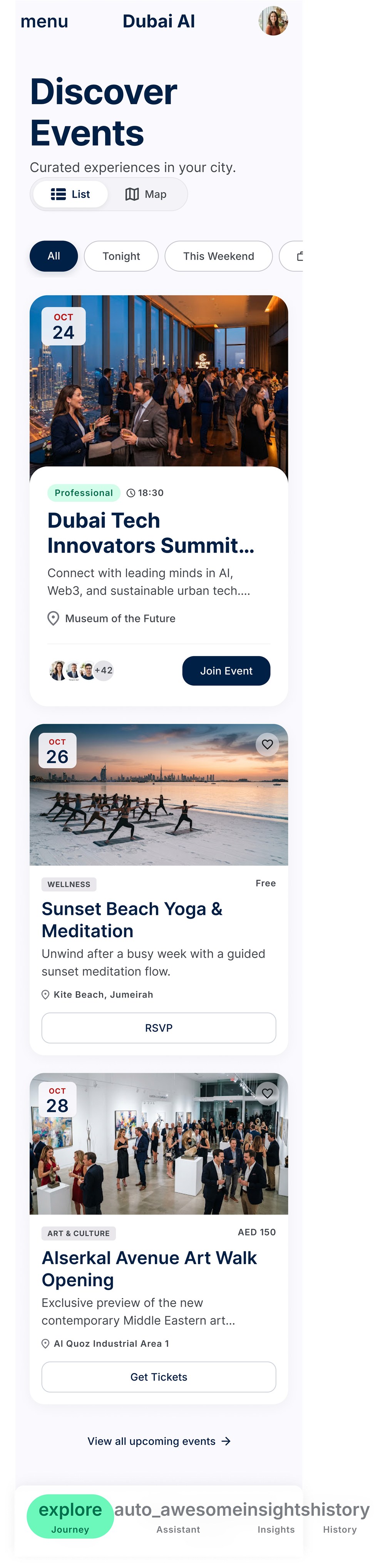
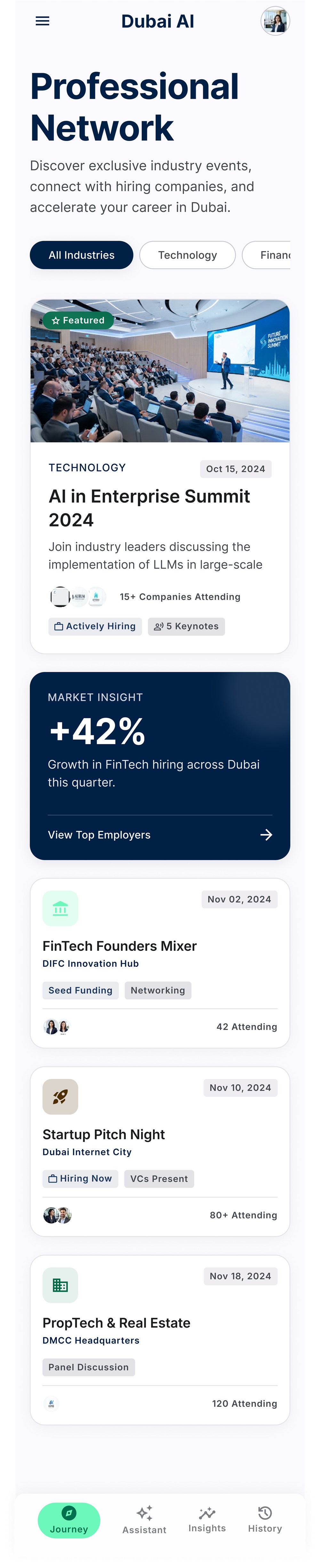
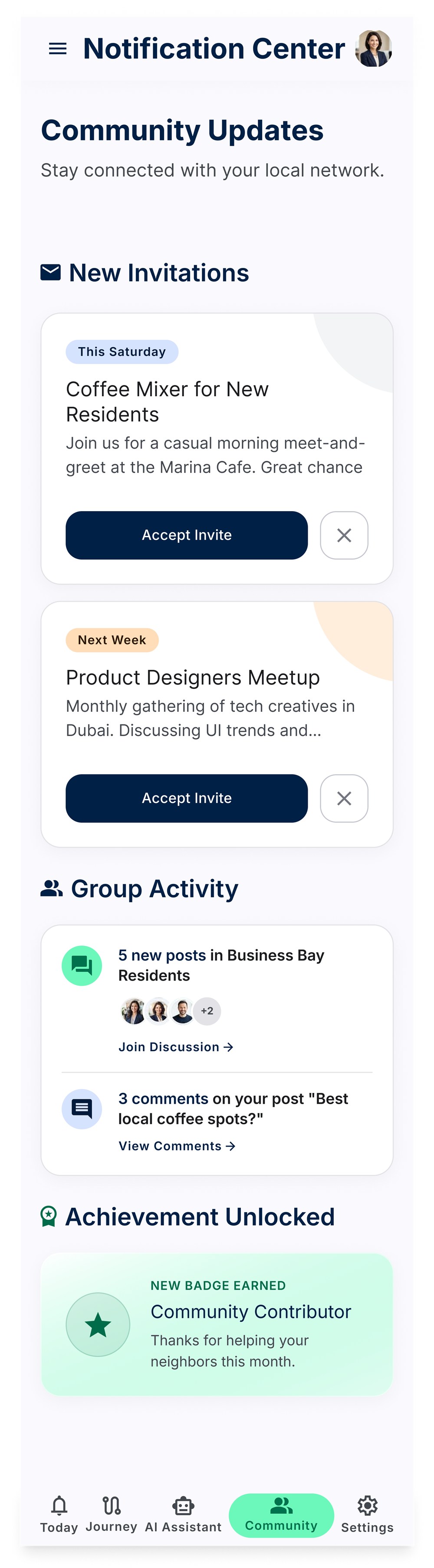
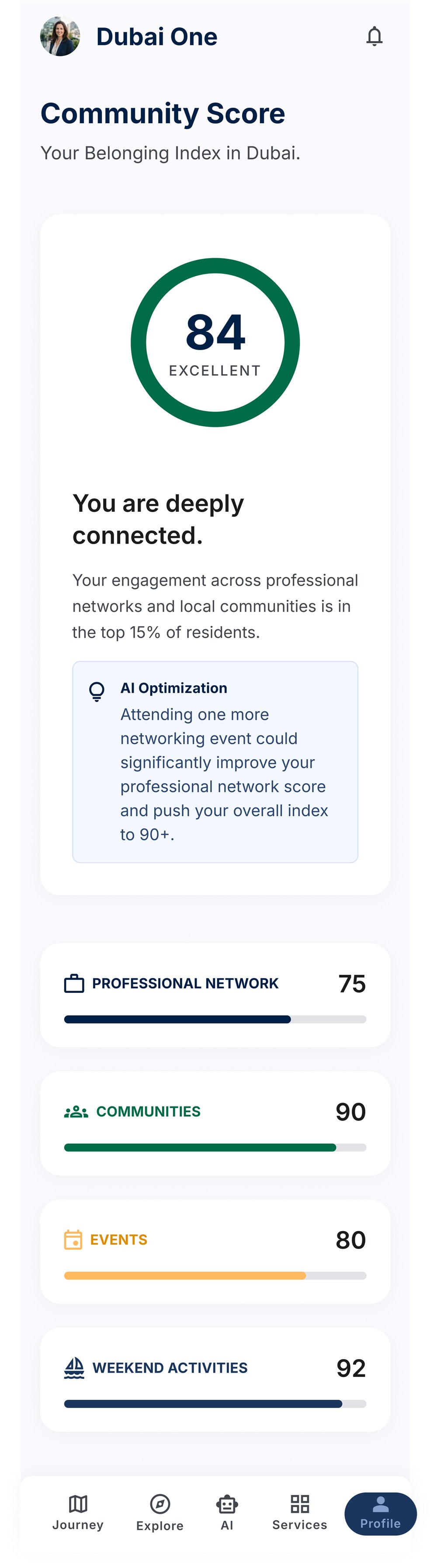
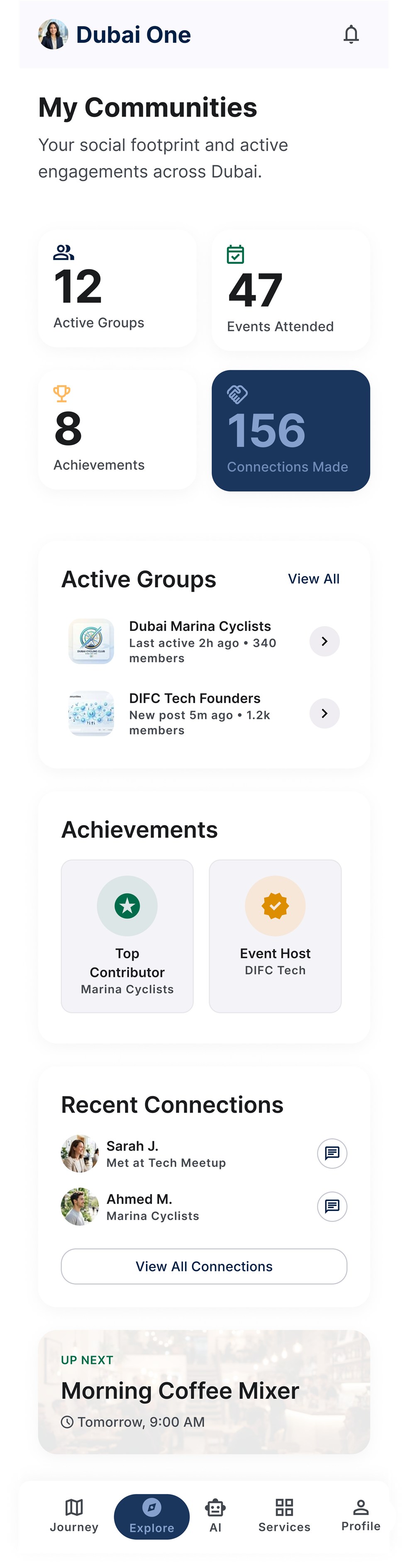
Community
Turn belonging into something the product actively supports, not a byproduct of using other features.
Design decision — groups and events are surfaced by neighborhood and life stage, not a generic feed.
Module 08
Explore
Recommend the city based on how a resident actually lives, not generic tourist listings.
Design decision — recommendations are shaped by resident context, not a static directory.
01 — Explore Dashboard
Personalized places to explore
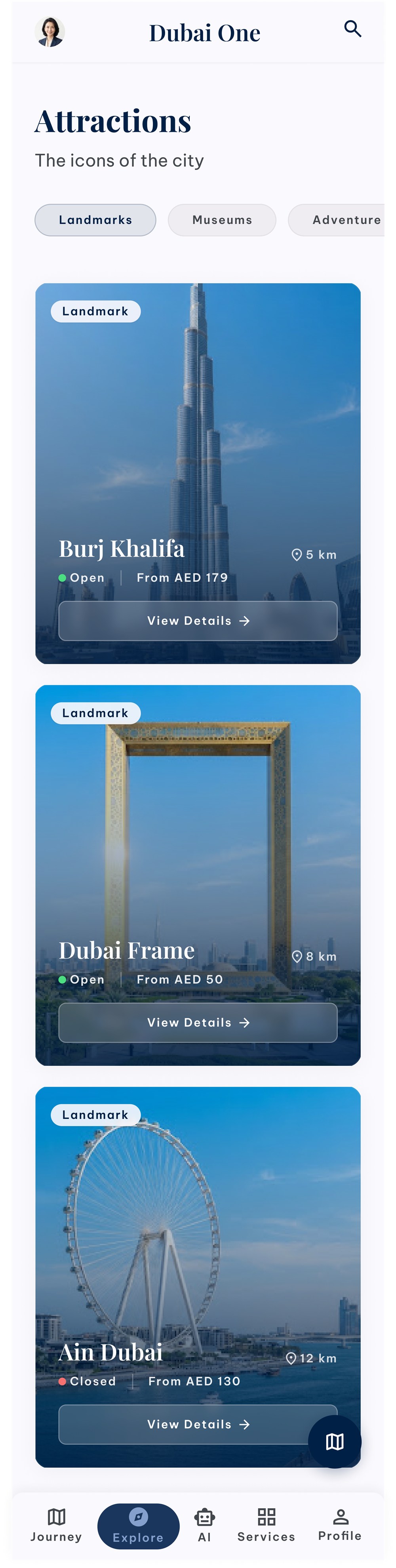
02 — Attractions Discovery
Discover city attractions
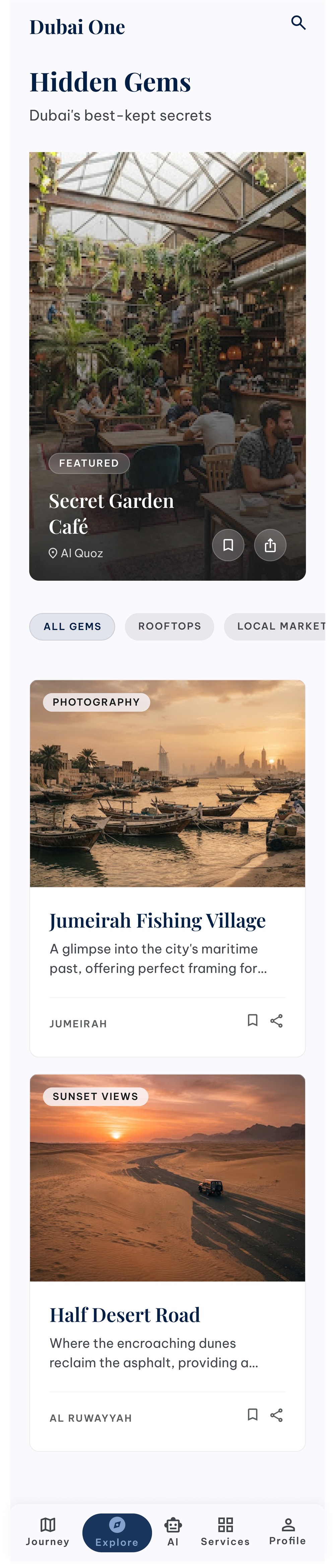
03 — Hidden Gems
Lesser-known places around Dubai
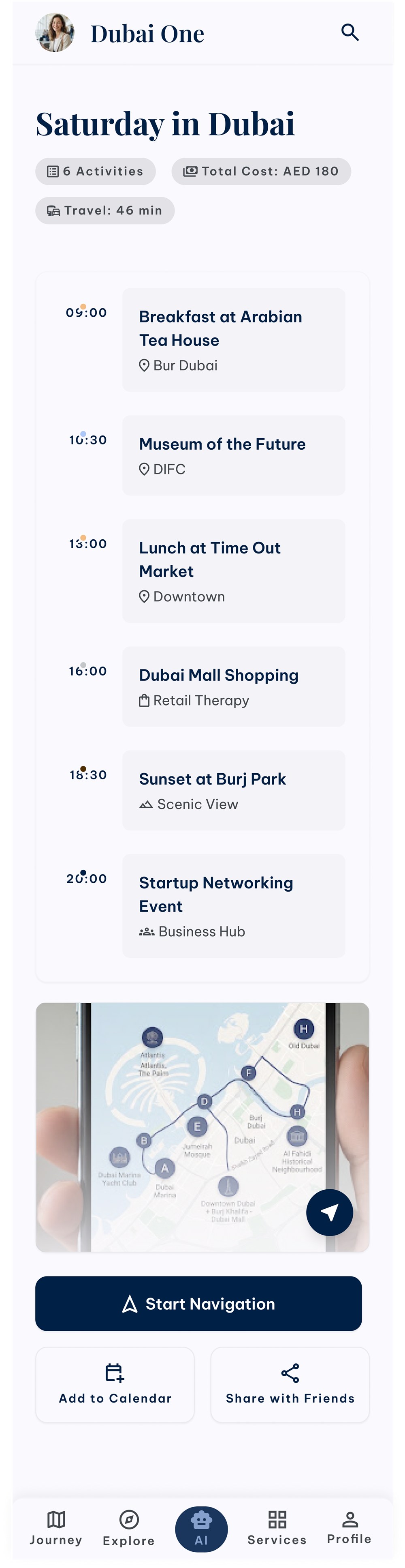
04 — Weekend Planner
A suggested weekend itinerary
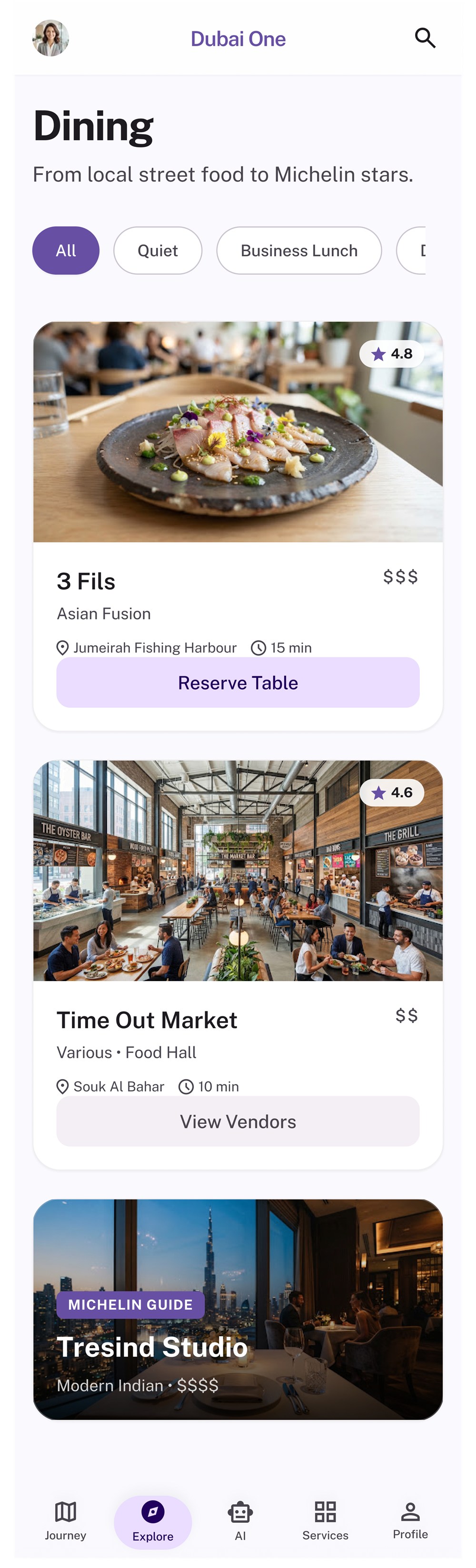
05 — Restaurants & Cafés
Dining recommendations
06 — Beaches & Parks
Outdoor places and local escapes
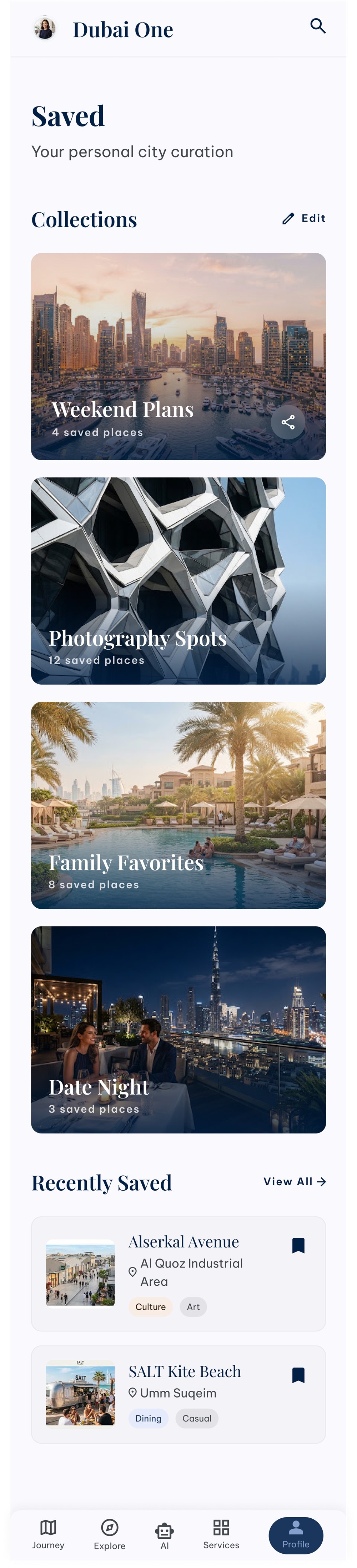
07 — Saved Places
Your saved city destinations
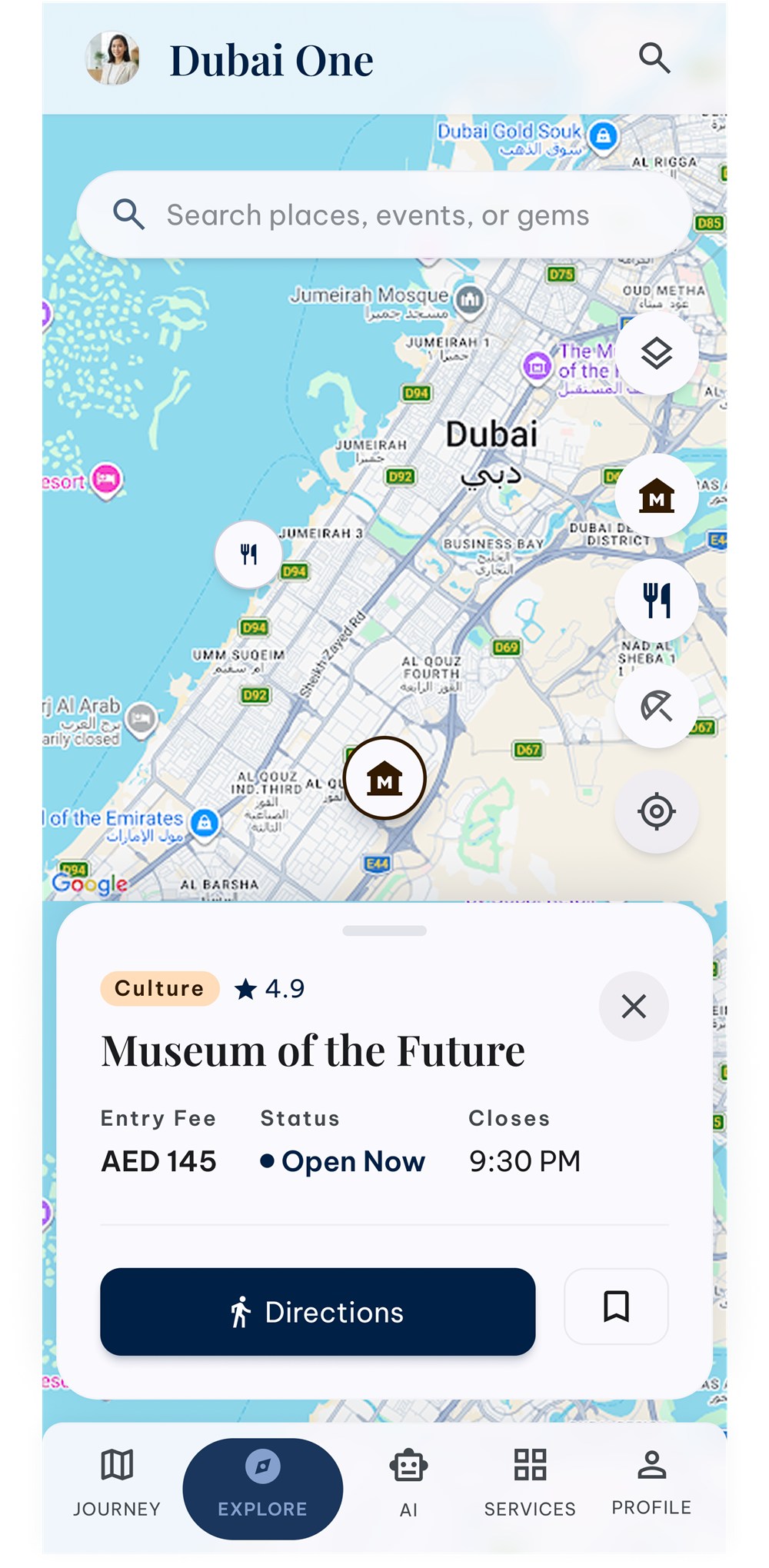
08 — Interactive Explore Map
Explore nearby places on a map
Module 09
Profile
One identity, timeline, and settings surface shared across every module.
Design decision — privacy and data controls are written in plain language, not legal or technical terms.
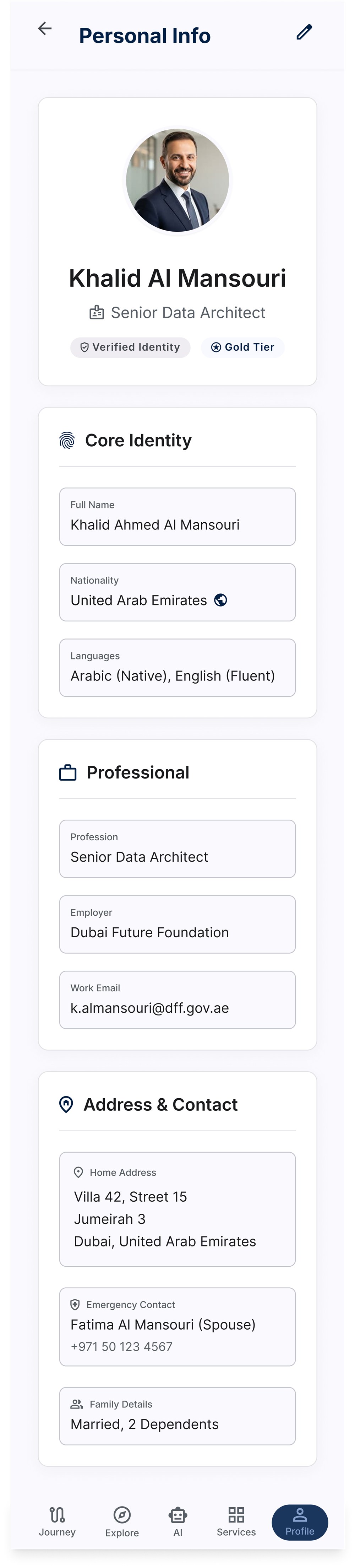
01 — Personal Information
Resident profile and personal details
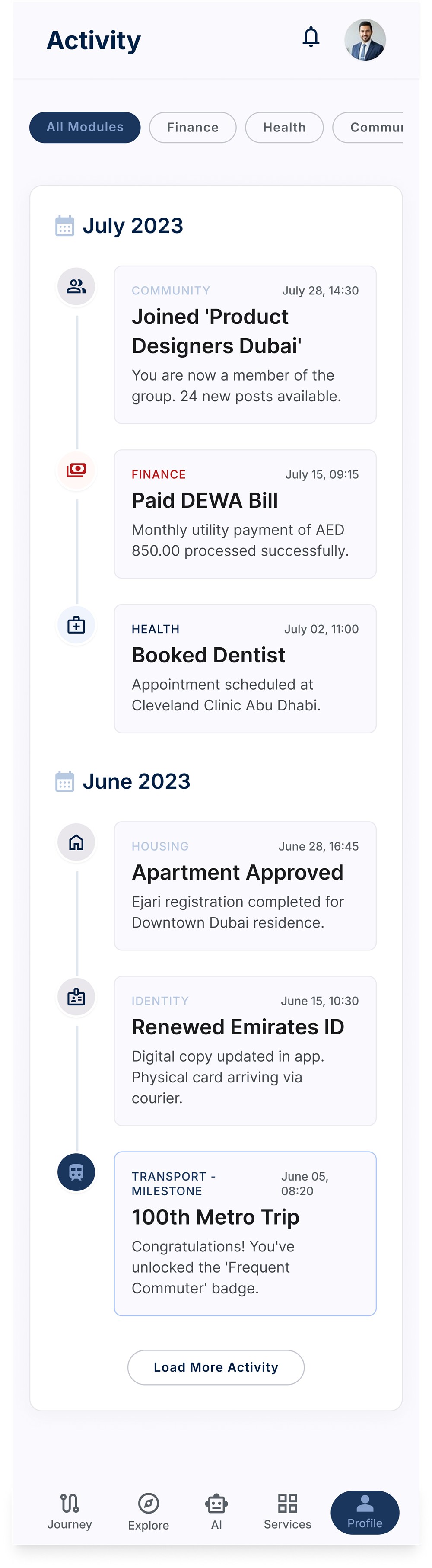
02 — Activity History
Past resident activity and milestones
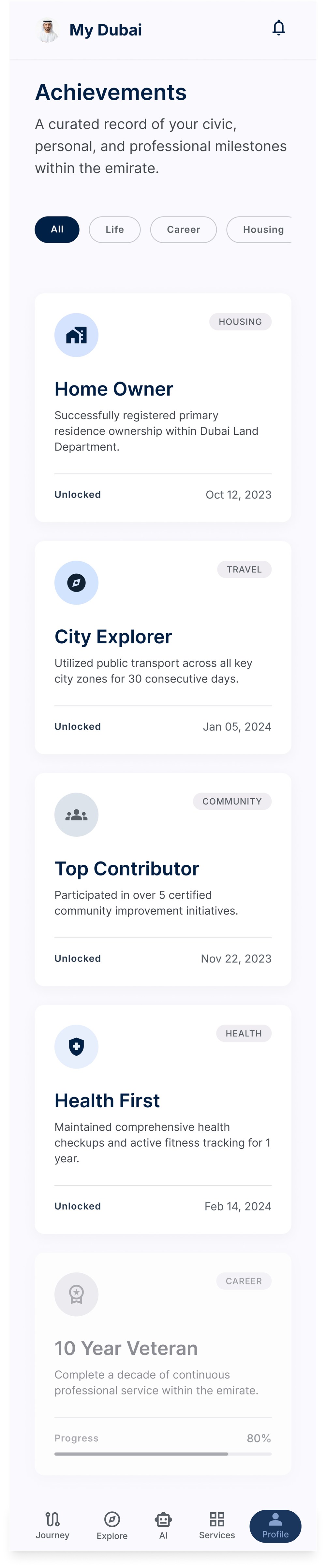
03 — Achievements
Badges and milestones reached
04 — Documents Wallet
Identity and resident documents
05 — AI Personal Insights
Personal patterns and recommendations
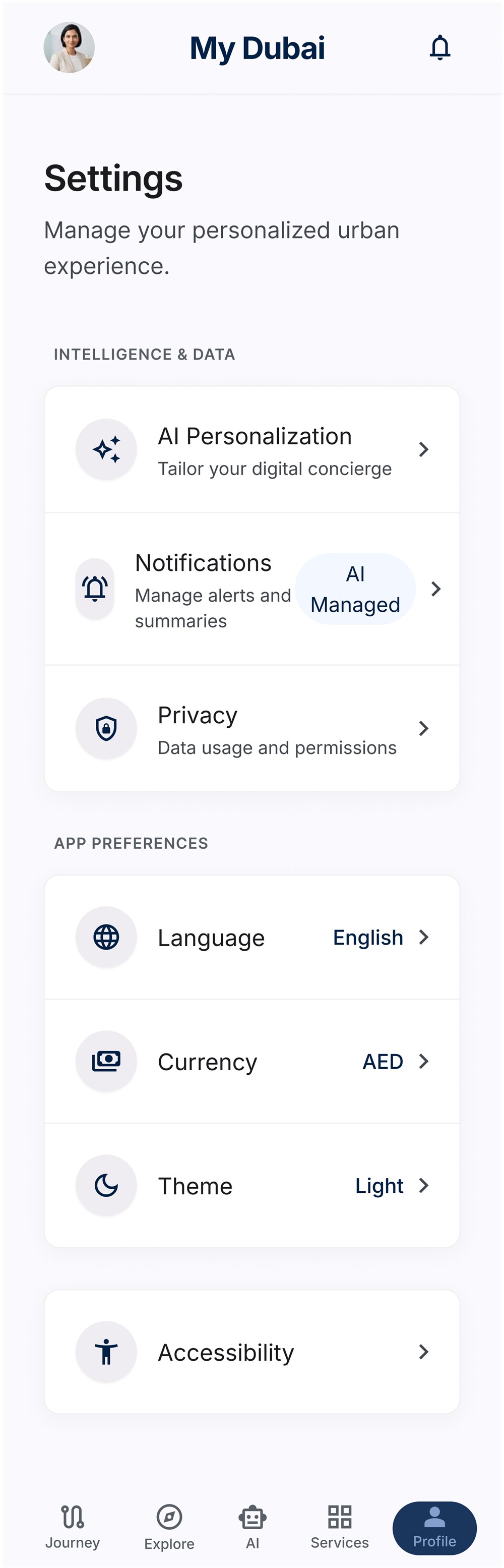
06 — Preferences & Settings
Personalization and account preferences
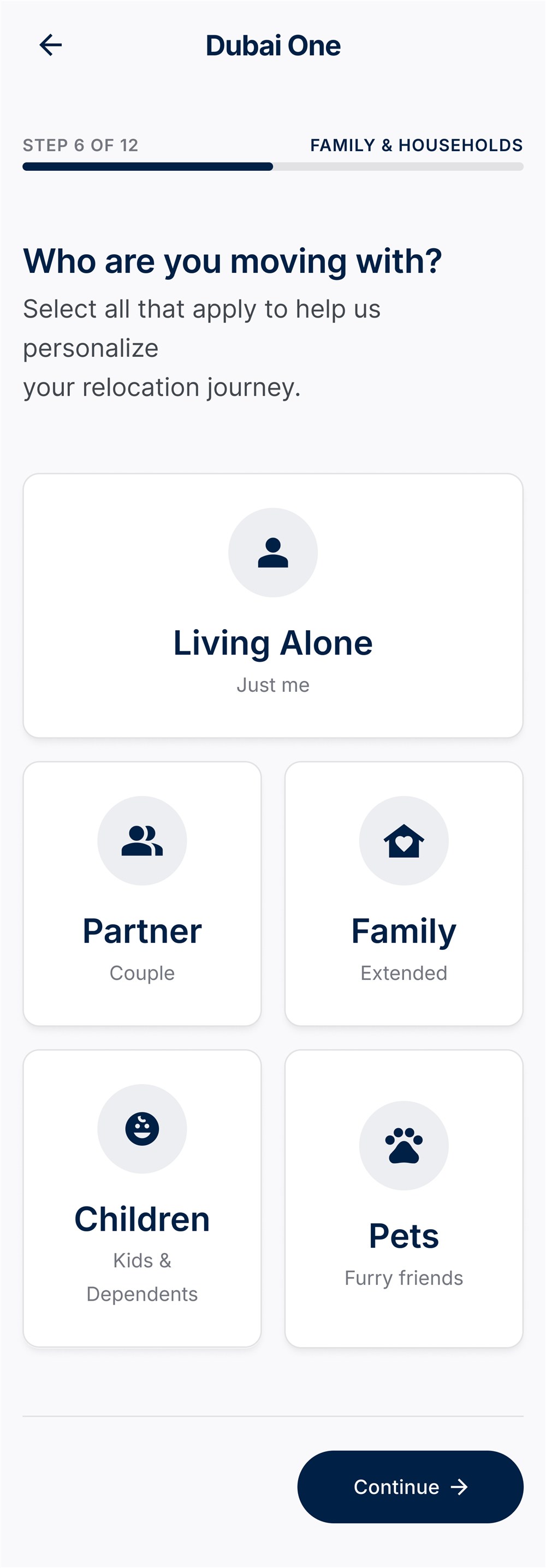
07 — Family & Household Setup
Set household and family context
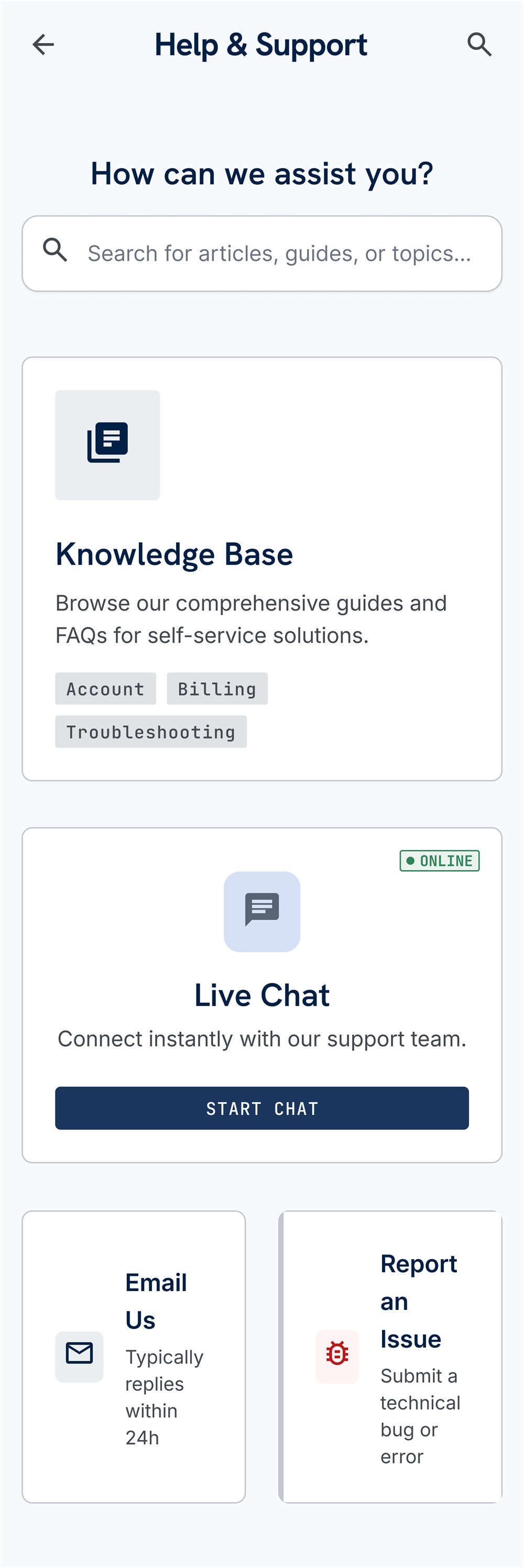
08 — Help & Support
Support channels and common questions